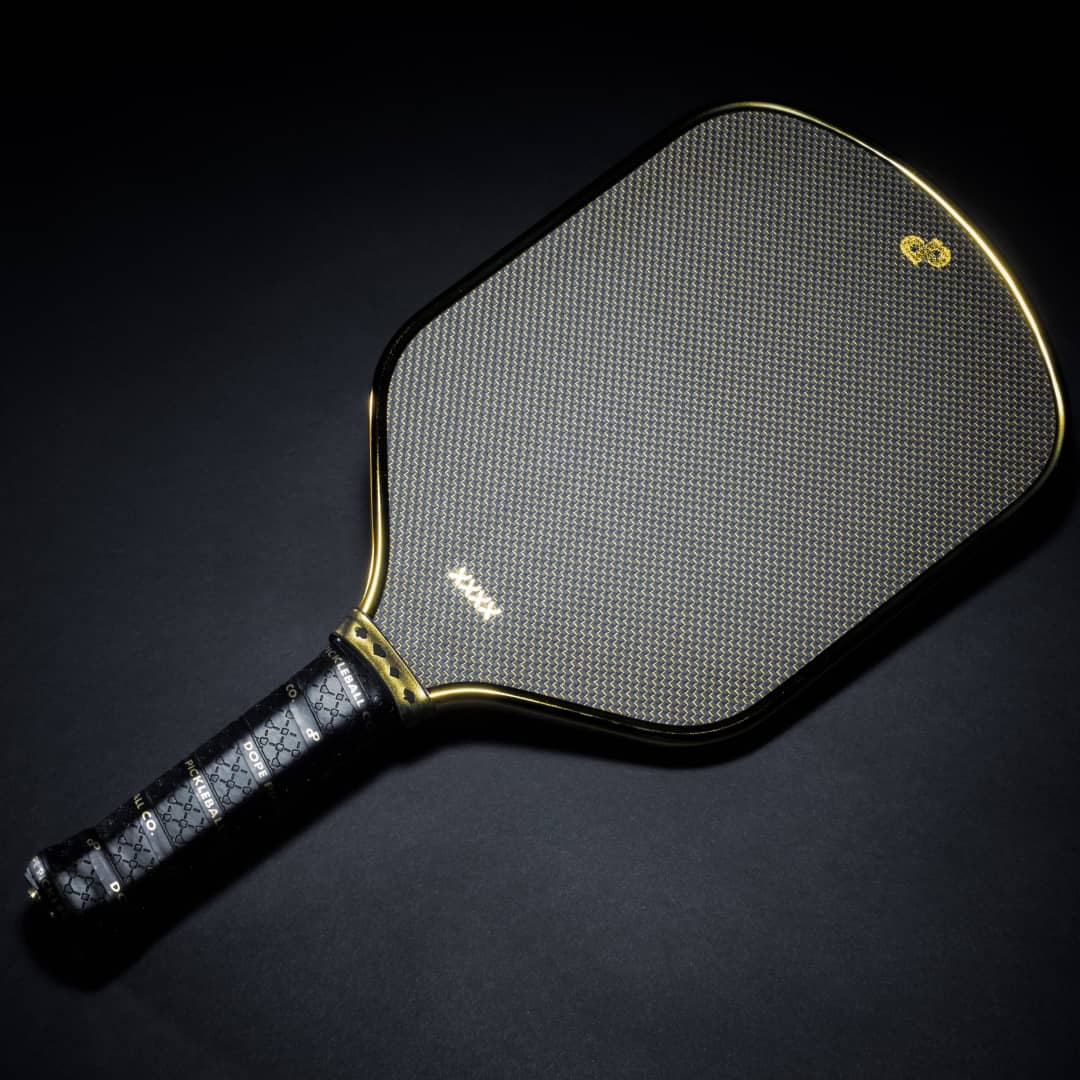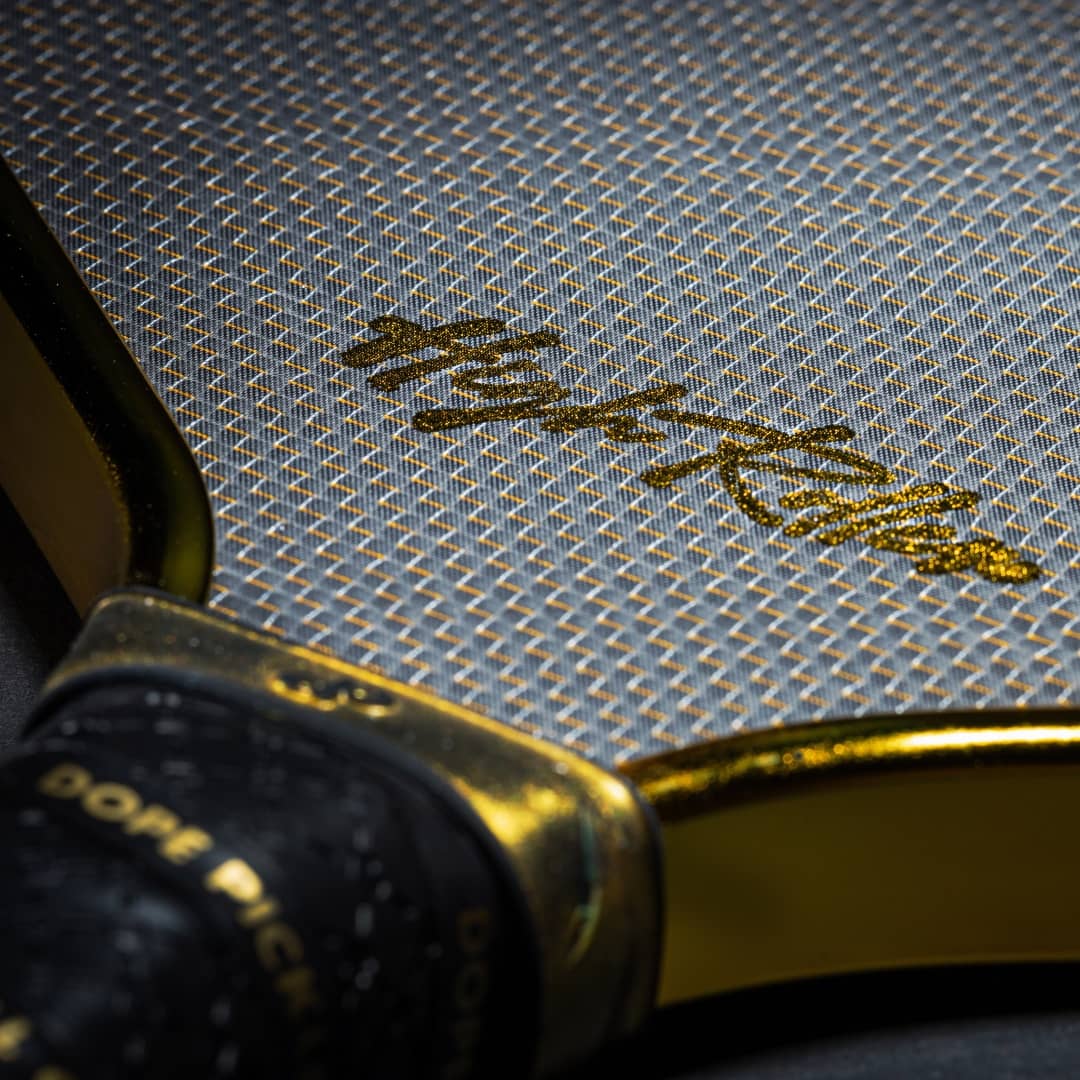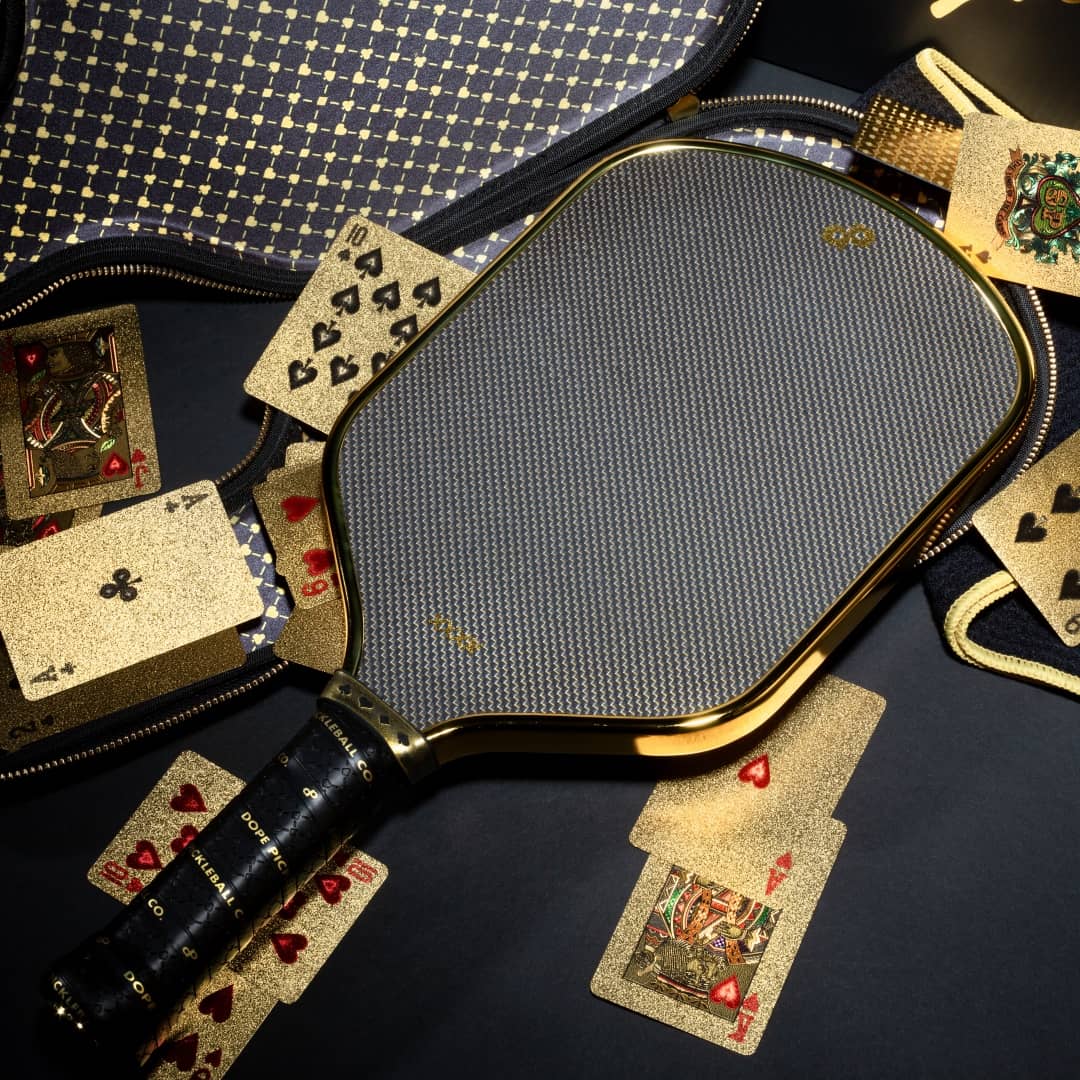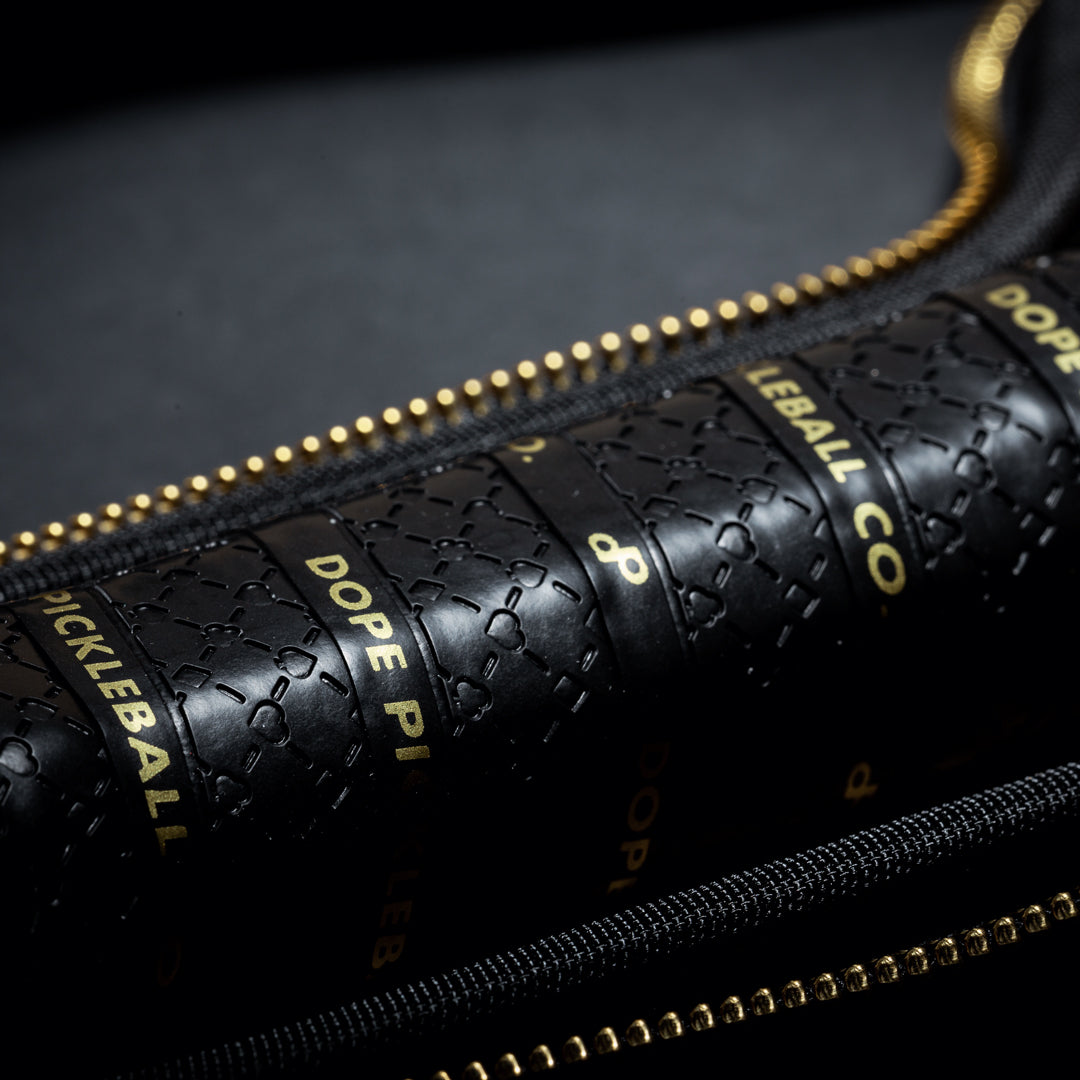


“DOPE Pickleball” is meant to signal that pickleball gear can be bold, culturally current, and visually specific rather than anonymous. In the current brand context, “dope” is used as positive slang for something impressive or highly appealing; the catalog expresses that idea through chrome gold, black-and-gold identity, glitter-infused color, and a deliberately visible product system.
The current storefront does not publish a dated founder interview, naming memo, or trademark history that reconstructs the exact moment the name was chosen. This article explains the meaning the active brand communicates today—not an invented private conversation.
The Name Makes a Promise About Energy
Many sporting-goods names aim for speed, precision, strength, or technical authority. DOPE begins with reaction: the product should make someone look twice. That promise appears most clearly when the exact object can carry the reaction without exaggerated copy.
A strong brand name cannot rescue an inaccurate product page. “Dope” should mean the real product is worth seeing, the details are current, and the boundaries are clear.
The Name Is Not a Performance Claim
Calling a paddle, ball, hat, shirt, case, or bundle DOPE does not prove power, spin, control, durability, visibility, safety, approval, or value. It is brand identity and evaluative language. Specific claims still require specific evidence.
The active High Roller paddle is not USA Pickleball approved. The name and visual finish do not change that. It belongs in recreational or unsanctioned play where permitted.
The Current Visual Meaning: Black, Gold, and Recognition
The active High Roller Lounge T-shirt puts the brand into a simple wearable form. Its listing describes a 96% bamboo and 4% cotton blend, a form-fitting cut, rubberized logo, and current size range. The name does not add cooling, wicking, UPF, or injury-prevention properties.
Across the catalog, black and gold connect paddle, apparel, socks, hats, case, tumbler, sunglasses, balls, and bundle. The “DOPE” meaning is coherence plus visibility—not a need to place the largest possible logo on every item.
The Reversed Collaboration Extends the Identity
The active black DOPE x Reversed hat shows how the name can move into a collaboration while remaining identifiable. The active catalog also includes a white version and a black-and-gold High Roller version. Current fit, construction, price, inventory, and care belong to the live product pages.
“Co.” Signals a Catalog, Not One Paddle
The longer name—DOPE Pickleball Co.—can hold more than the High Roller. The current catalog includes paddles, balls, apparel, accessories, a bundle, and a gift card. “Co.” gives the brand room to develop categories without claiming a future roadmap that has not been announced.
That room should remain disciplined. An article must not promote an inactive product, invent an upcoming drop, or imply that every branded object is tournament equipment.
The Word Has Multiple Meanings
“Dope” can carry different meanings depending on audience and context, including meanings unrelated to this sporting-goods brand. Clear visual context, the full company name, and product-specific copy help readers understand the intended positive slang meaning.
The brand should not imply a medical, pharmaceutical, drug, safety, or performance connection. It should also avoid language that glamorizes harmful use when communicating with youth or broad public audiences. Bold identity and responsible context can coexist.
Context Matters Across Audiences and Countries
Slang does not travel uniformly. Retail partners, venues, schools, youth programs, marketplaces, advertisers, and international customers may read the word differently. The full company name, sport imagery, product category, and plain-language description reduce ambiguity.
When a platform or institution has naming or content rules, follow them honestly. Do not disguise the brand, evade a policy, or claim another meaning only to secure placement.
Search Results Need the Full Meaning
SEO titles and descriptions should pair DOPE with pickleball and the exact topic. A page called only “Dope” could be ambiguous; “DOPE Pickleball chrome-gold paddle” gives the reader and search engine real context.
The page should answer the query near the top, then link current active products. Keyword repetition should not replace useful information or force the name into unrelated health, drug, or legal searches.
Customer Support Reinforces the Name
A distinctive name creates expectations. Support should answer with the exact order, product, variant, current terms, and correction path. It should not hide behind brand voice when a customer asks about fit, approval, damage, shipping, return, warranty, bundle contents, or an advertised benefit.
Clear service turns “dope” from a slogan into a repeatable customer experience.
Brand Integrity Signals
- current product pages and exact photographs;
- visible inactive-product status;
- approval and safety limitations near promotion;
- no fake ratings, athletes, tests, or inventory;
- clear sponsorship and material-relationship disclosure;
- dated corrections when facts change; and
- a support path that can verify the transaction.
What the Name Does Not Promise
DOPE does not promise that every customer will like the aesthetic, that every product fits every player, or that the catalog will always contain the same items. It does not establish USA Pickleball approval, independent testing, medical benefit, exclusive access, permanent discounts, or future product releases.
Those questions must be answered by the current product record, evidence, and terms. Keeping the name separate from unsupported promises protects the energy that made it memorable.
The Name Should Welcome More Than One Player Type
DOPE should not be defined as a brand only for advanced players, influencers, younger customers, tournament competitors, or people who can afford a full bundle. A beginner can value design; an experienced player can need approved equipment elsewhere; a non-player can buy apparel or a gift card.
The brand fits best when a customer chooses the exact active product for the exact setting. Identity is shared; use remains individual.
How the Brand Name Should Appear in Editorial
- Use “DOPE Pickleball” or “DOPE Pickleball Co.” consistently.
- Link the exact active product rather than a retired handle.
- Use exact original product photography.
- Do not turn “dope” into an unsupported superlative or ranking.
- State approval, safety, compatibility, size, and quantity accurately.
- Separate company voice from independent evidence.
- Keep historical collections in past tense when inactive.
A Name Earns Meaning Through Repetition
The name becomes credible when customers repeatedly encounter the same combination: a distinctive visual choice, an exact real product, current facts, and a clear intended setting. The Michelob ULTRA campaign gave the High Roller a large public moment, but the day-to-day meaning is built across every listing, image, package, support response, and correction.
That is what “DOPE Pickleball” can mean now: disrupt the visual default, keep the product real, and make the claim no bigger than the evidence.
It is a meaning customers can verify each time the product, photograph, listing, and support answer agree.
Frequently Asked Questions
Why is the company called DOPE Pickleball?
The current brand uses “dope” in its positive slang sense—impressive, distinctive, and culturally current—and expresses it through a bold, design-forward catalog.
Does the name make a product higher performance?
No. Brand identity does not prove performance, approval, durability, safety, or value. Evaluate the exact product and evidence.
Is DOPE only for advanced players?
No. Customers should choose by setting, approval needs, fit, current product facts, budget, and design preference rather than an invented skill requirement.


Share:
DOPE Pickleball Brand Story: A Verified Public Timeline