

A 14-day pickleball serve plan should measure improvement rather than promise it. Track three things: legal-serve percentage, depth, and target accuracy. Practice a small number of focused repetitions, alternate technical and pressure days, and keep the same pre-serve routine. Your result will depend on experience, health, practice quality, and feedback—but two structured weeks can reveal exactly what to work on next.
This plan uses the 2026 USA Pickleball rules. It works with a legal volley serve or drop serve.
Day 0: Set a Real Baseline
Before changing technique, hit 30 serves using your normal motion:
- 10 from the right to a large deep-middle target;
- 10 from the left to a large deep-middle target;
- 10 alternating sides as if points were being played.
Record:
- how many were clearly legal;
- how many landed in the correct service court;
- how many landed beyond the midpoint of the box;
- how many hit the chosen target;
- the most common miss: net, long, wide, kitchen, or foot fault.
Use the same test on Day 14. A before-and-after comparison is more honest than deciding improvement by memory.
Legal Serve Requirements to Protect First
According to the 2026 USA Pickleball Official Rulebook, every serve shares these requirements:
- at least one foot contacts the correct serving area behind the baseline at contact;
- neither foot touches the court or playing surface outside the serving area;
- the release uses one hand or the paddle and remains visible;
- the server does not manipulate the release to add spin;
- the serve follows the complete score call and occurs within ten seconds;
- the ball travels diagonally, clears the kitchen, and lands in the correct service court.
A volley serve also needs a clear upward arc, paddle head below the highest part of the wrist, and contact no higher than the waist. A drop serve uses a natural, unpropelled release and is struck after a bounce.
If legality is uncertain, simplify before adding speed. Read the full 2026 serve rules and technique guide.
Use Three Serve Metrics
1. Make percentage
Count serves that are clearly legal and land in the correct box. Pickleball has one serve attempt under standard rules, so reliability comes first.
2. Depth percentage
Place a visual line or flat safe marker around the middle of the service box. Count makes that land beyond it. Deeper is not always better, but a reliable deep default limits the receiver’s ability to step forward.
3. Target percentage
Divide the deep area into middle, body, and wide zones. Count only balls that land inside the intended zone. Accuracy matters more than calling a miss “close.”
Days 1–7: Build a Repeatable Motion
| Day | Focus | Session |
|---|---|---|
| 1 | Legal release and foot position | 20 slow serves; stop after every five to check baseline and release |
| 2 | Contact point | 25 serves at 60–70% effort; freeze the finish and note late contact |
| 3 | Depth | 30 serves to one large deep-middle target, alternating sides |
| 4 | Recovery | 20 serves; after each, recover behind baseline for the return bounce |
| 5 | Routine | 25 serves using the same breath, target look, score call, and motion |
| 6 | Light pressure | Five sets of five; goal is four legal makes per set |
| 7 | Recovery or video review | No volume requirement; review notes and identify one change only |
Do not stack every technical cue into one swing. Choose the dominant error from Day 0 and use one short cue, such as “space,” “up,” “finish middle,” or “stay behind.”
Days 8–14: Add Placement and Match Pressure
| Day | Focus | Session |
|---|---|---|
| 8 | Deep middle | 30 serves; score depth and target separately |
| 9 | Backhand-side target | 20 controlled serves; move the target, not the whole motion |
| 10 | Wide target | 20 serves with extra sideline margin; stop if misses spread |
| 11 | Random target | Choose middle, body, or wide before every serve; 24 total |
| 12 | Score-call pressure | Simulate a game; every serve gets one attempt and a full routine |
| 13 | Low-volume tune-up | 15 comfortable serves to your highest-percentage target |
| 14 | Retest | Repeat the exact 30-ball Day 0 test |
If pain, unusual fatigue, or loss of control appears, stop. More repetitions are not better when movement quality is declining. Adjust the plan to your current capacity and seek appropriate professional guidance when needed.
Three Core Serve Drills
Large-target ladder
Begin with a target that covers most of the deep half. After five consecutive makes, reduce it slightly. If two consecutive serves miss, enlarge it again. The drill adapts challenge to current consistency.
Second-ball recovery
Serve, then have a partner or ball machine send a deep return that must bounce. Practice recovering behind the baseline and playing the third shot. A serve is part of a point, not an isolated finish.
One-ball pressure
Place one ball in hand, call a realistic score, select a target, and serve. Walk to retrieve it before repeating. The delay prevents rhythm from hiding a weak routine.
Troubleshooting Common Serve Misses
- Into the net: add safe net clearance, check contact height and upward path, and reduce pace.
- Long: lower launch angle, stabilize the face, and confirm contact is not too far behind.
- Wide: simplify the target, finish toward center, and verify spacing.
- Kitchen: build depth with a smoother full motion rather than forcing only the arm.
- Inconsistent direction: use the same setup and reduce variables before changing spin.
- Foot fault: begin farther behind the baseline and finish the contact before stepping in.
Choose Practice Balls for Visibility and Flow
Use enough matching balls that the session is not dominated by retrieval. Choose a color that contrasts with the court, fence, and background. DOPE’s Pink & Yellow Glitter-Infused Bundle is available in multiple quantities, while the Pink and Yellow balls can be purchased separately.
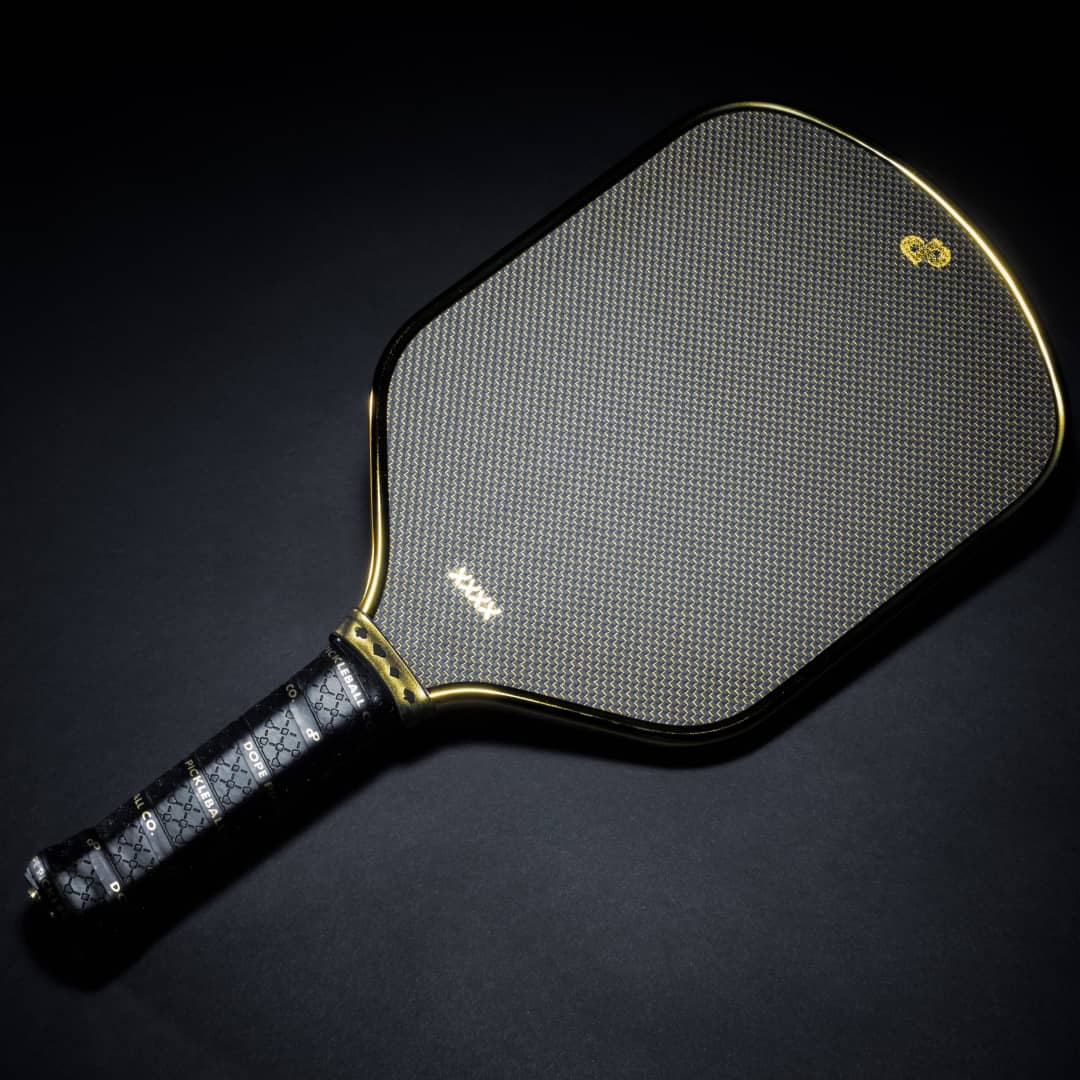
If you practice with the High Roller Chrome Gold Paddle, remember that it is not USA Pickleball approved and is intended for recreational or unsanctioned play where permitted. Use a currently approved model for sanctioned competition.
How to Evaluate Day 14 Without Fooling Yourself
Repeat the same baseline test you used on Day 0: same court, targets, ball type, number of attempts, and scoring rules. Compare legal-serve rate, depth, and target accuracy separately instead of collapsing them into one favorable impression. Note weather and fatigue when they differ. Improvement may appear as fewer service faults, a tighter miss pattern, or a motion that stays usable under score pressure—not necessarily more speed. Keep the next training goal narrow and continue recording results; a two-week plan is a measurement cycle, not a guaranteed finish line.
Frequently Asked Questions
Can you improve a pickleball serve in two weeks?
Structured practice can improve measurable consistency for some players, but no outcome is guaranteed. Compare legal makes, depth, and target accuracy before and after.
How many serves should you practice per day?
Quality matters more than a universal number. This plan uses roughly 15–30 focused serves on most practice days and includes lower-volume or review days.
Should beginners practice power or placement first?
Build a clearly legal, reliable serve with depth and a large target before increasing pace or adding more variation.
What is a good pickleball serve percentage?
There is no single official benchmark for recreational players. Track your own legal-make percentage and aim for repeatable improvement under game-like pressure.
Should you practice a volley serve or drop serve?
Practice the method you can perform legally and repeatably. Learning both can provide an alternative when conditions or timing change.


Share:
5 Common Pickleball Mistakes and How to Fix Them
Doubles Pickleball Strategy: Build a Winning Partner System