

Winning doubles pickleball is less about having two great singles players and more about running one clear partner system. The best teams decide who owns the middle, move forward and sideways together, choose compatible third-shot patterns, communicate before confusion happens, and adjust without blaming each other.
This guide goes beyond basic positioning. It shows how to build a repeatable doubles pickleball strategy with roles, calls, movement rules, serve-and-return patterns, stacking basics, and practice games you can use with any partner.
Start With a Partner System, Not a Highlight Shot
A partner system answers predictable questions before they become point-ending hesitation:
- Who takes a ball through the middle at each court position?
- Who covers a lob over the backhand side?
- Does the serving team prefer a third-shot drop, drive, or situational mix?
- When one player is pulled wide, how does the other protect the open court?
- What call means switch, stay, bounce, out, or timeout?
You do not need a complicated playbook. You need answers that both players understand. Start with one default and one exception for each recurring situation. For example: “Forehand takes a neutral middle ball; the player under less pressure takes a ball at the feet.” That is more useful than a slogan that assigns every middle ball to one stroke.
Move as a Connected Pair
Imagine a flexible cord between you and your partner. When one player shifts toward a sideline, the other shades toward the middle. When one advances, the other evaluates whether the same ball allows forward movement. The spacing changes with the rally, but the pair should not leave an unprotected runway between them.
Side-to-side movement
Follow the ball. If your team sends the ball wide to the opponent on your left, both partners shift left because the likely angles change. The left-side player protects the line; the right-side player closes the middle. If the ball crosses to the other side, the pair shifts together.
Forward-and-back movement
Advance when the quality of your shot gives time. If one player reaches the kitchen while the other remains deep, the opponents can attack the gap and the advancing player’s feet. A good drop or low reset can be a shared green light. A high ball is a shared warning to stop, split step, and defend.
Who Takes the Middle Ball?
“Forehand takes the middle” is a useful starting point for some right-handed pairs, not a universal law. The correct owner depends on contact height, pressure, movement, reach, handedness, and the next court position.
Assign middle balls with this order:
- Call: an early “mine” overrides the default when the caller has a playable ball.
- Pressure: the player who can contact in front and remain balanced usually has priority.
- Stroke: a forehand may be stronger, but a prepared backhand volley can beat a late reaching forehand.
- Position: the player moving into the ball often has a cleaner angle than the player moving away.
- Team shape: the hitter’s recovery should not expose the entire next ball.
Left-handed and right-handed partners can place both forehands in the middle—or both on the outside—depending on sides. Decide which arrangement supports your strengths and communicate on every ambiguous ball.
Plan the First Three Shots
Serving team
The server begins behind the baseline and should expect the return to bounce. The partner also needs to respect the two-bounce rule rather than drifting into a vulnerable position. A practical sequence is:
- Serve deep to a large target.
- Read the return together.
- Choose a third-shot drop, drive, or lob only when the incoming ball and team skill justify it.
- Advance on a ball that stays low; hold or defend on one that sits up.
A third-shot drive is often a setup, not the final shot. The partner should expect a blocked fifth ball and be ready to move. A third-shot drop is also not permission to sprint blindly; read its height and depth first.
Returning team
The returner should create enough depth and time to join the partner near the kitchen. The non-returning partner generally begins at the line and watches the serving team’s third shot. Once both returners are established, protect feet, middle seam, and lobs rather than hunting a winner on every volley.
For a rule-focused foundation, use the beginner doubles fundamentals guide. This article’s purpose is the partner operating system that comes next.
Cross the Transition Zone Together
The transition zone is not a place you must escape in one rush. It is a place to split step, evaluate, reset, and earn the next step forward.
Use a simple traffic-light system:
| Ball quality | Team response | Primary goal |
|---|---|---|
| Low and unattackable | Green: advance together | Reach a balanced kitchen position |
| Uncertain or medium height | Yellow: hold and split step | Read the opponent before moving again |
| High or driven at the body | Red: defend, reset, or give ground | Keep the rally alive and remove attack height |
If one partner receives repeated pressure, the other should not become a spectator. Shade toward the likely next ball, communicate, and be ready to take a playable middle contact.
Stacking Basics: Use It for a Reason
Stacking lets partners start or finish a point on preferred sides while still serving and returning from the correct positions. Teams may stack to keep a particular forehand in the middle, protect a weaker backhand, preserve a left-right combination, or create a familiar matchup.
Do not stack just because advanced teams do. It adds movement and score-position responsibilities. Before using it in a game, both players should know:
- the correct server or returner for the score;
- where each player moves after the serve or return;
- whether the team is full stacking or only on selected rotations;
- what hand signal or verbal call changes the plan.
If the stack causes wrong-position errors or rushed movement, traditional positioning is the better competitive choice until the pattern is practiced.
Communication That Helps Instead of Distracts
Good doubles communication is early, short, and connected to an action.
- Before the rally: target, return side, stack or stay, third-shot preference.
- During the rally: mine, yours, bounce, out, switch, hold, up, back.
- After the rally: one neutral observation and one next-point plan.
“We need to communicate” is not specific. “Your forehand owns the neutral middle ball” is. “Stop missing returns” creates tension. “Deep middle with extra margin” creates a target.
Three Doubles Partner Drills
1. Middle-ball ownership drill
Feed balls to the seam at different heights and speeds. Partners must call every ball before contact. Score one point for early ownership and one for a controlled next position—not for hitting a winner.
2. Two-player transition drill
Begin both players behind the baseline. Feed a neutral third ball, then alternate low and attackable responses. The pair calls green, yellow, or red and moves accordingly. Restart whenever one player advances without the other recognizing it.
3. First-five pattern game
Play only through the fifth shot. The serving team earns a point for a legal serve, controlled third ball, and coordinated movement. The returning team earns a point for a deep return and stable kitchen position. This isolates the sequence that shapes many rallies.
Build a Coordinated DOPE Match-Day Setup
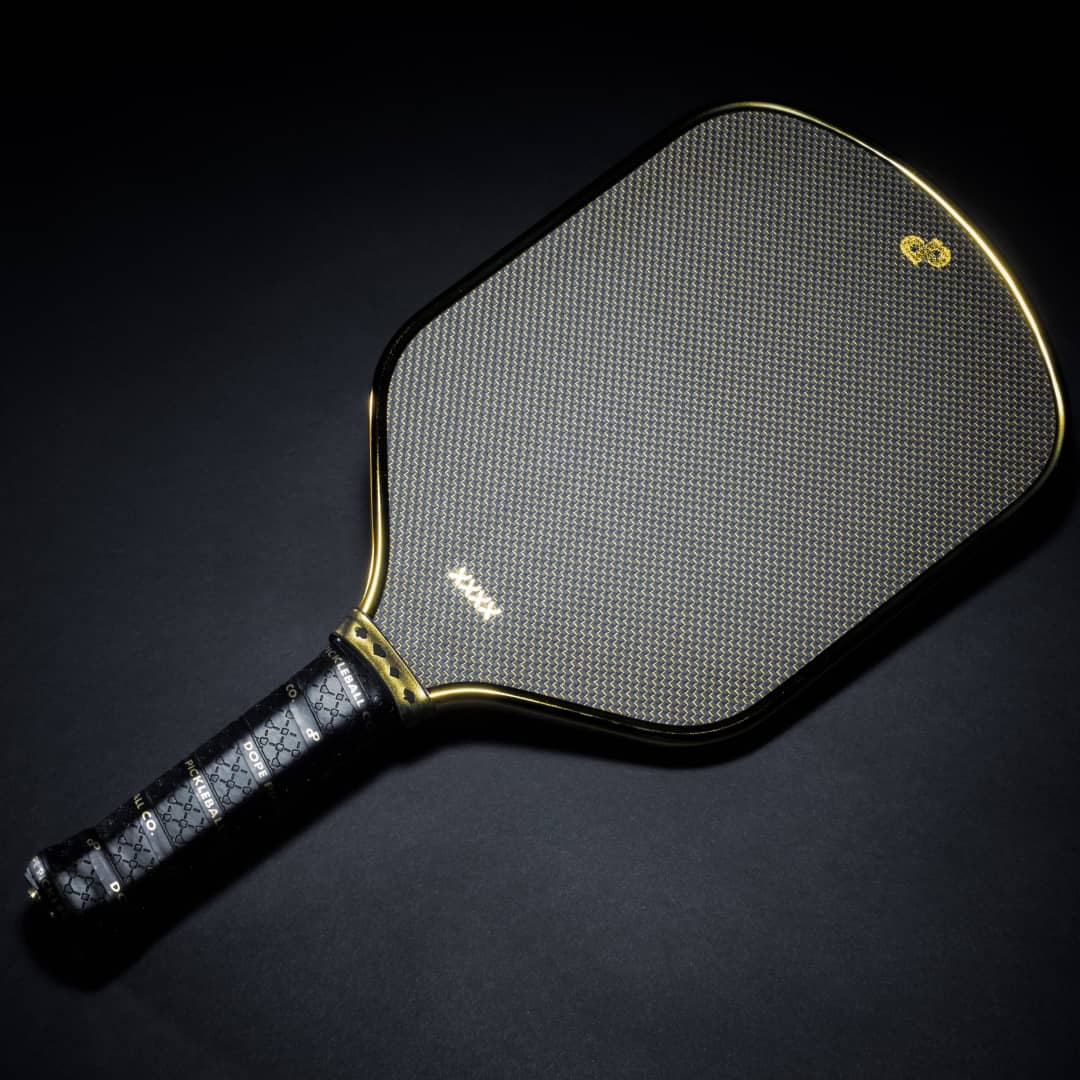
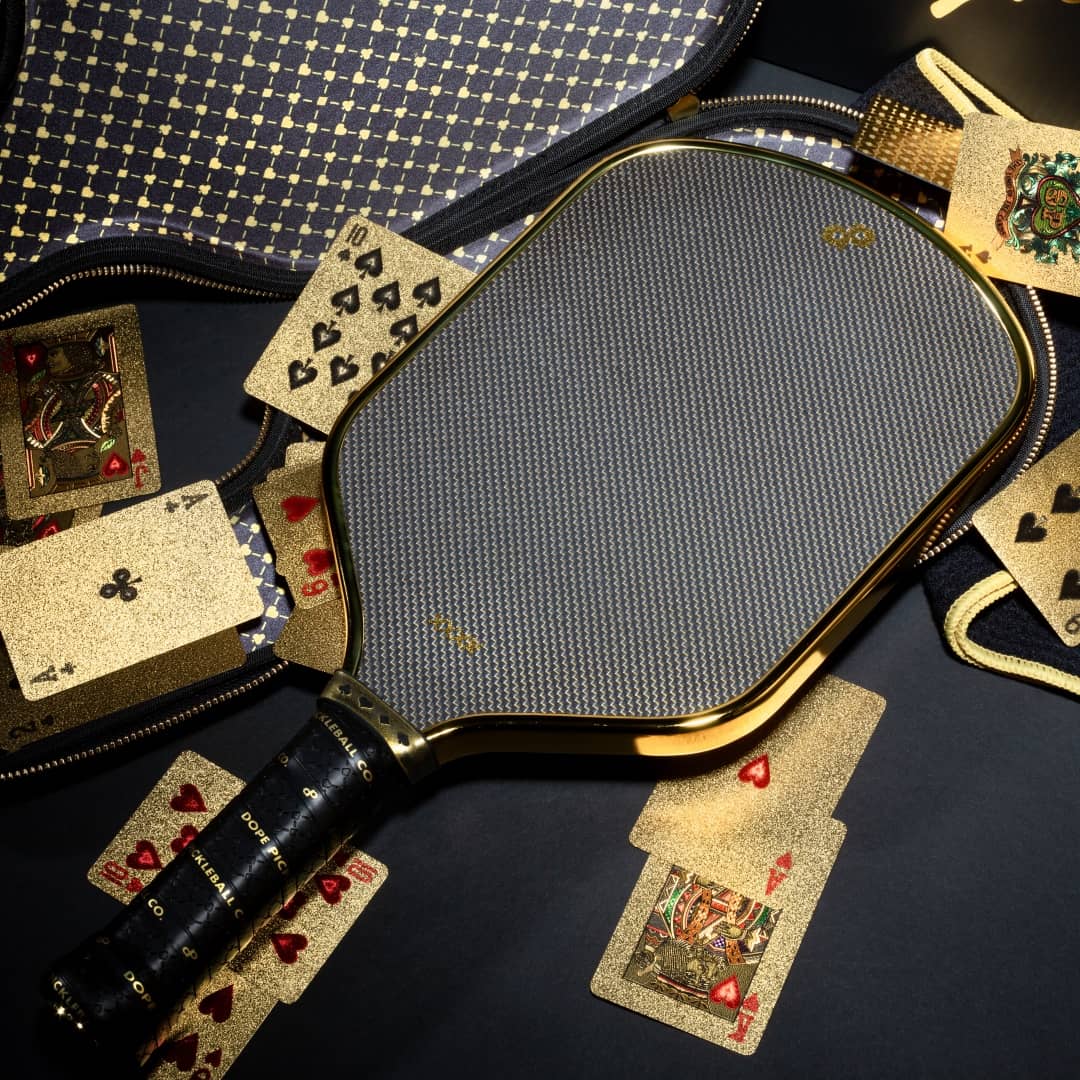
The High Roller Pickleball Club Bundle combines coordinated pieces from the black-and-gold collection, while the Pink & Yellow Glitter-Infused Ball Bundle gives partners two high-visibility color choices for practice. Choose ball color for contrast with the court and background.
The High Roller paddle included in the bundle is not USA Pickleball approved. It is positioned for recreational or unsanctioned play where permitted. For a sanctioned event, verify a paddle’s current status on the official USA Pickleball Approved Paddle List.
Frequently Asked Questions
What is the most important strategy in doubles pickleball?
Use a shared system: move together, assign the middle, coordinate the first three shots, and communicate with short action-based calls.
Who should take the middle ball in doubles?
The team should set a default, then prioritize the player with the clearest call, balanced contact, and recoverable position. A forehand default is useful but not absolute.
Should doubles partners always move together?
They should respond as a connected pair, but not mirror each other mechanically. Spacing changes with the ball, angles, and each player’s pressure.
When should a pickleball team stack?
Stack when it creates a clear positional advantage and both partners can track the score, correct server or returner, and post-contact movement.
What should partners say between points?
Use one neutral observation and one specific plan, such as “their returns are short; drive the third through the middle.”


Share:
14-Day Pickleball Serve Practice Plan: Legal, Deep & Accurate
Pickleball Paddle Buying Guide: What the Specs Actually Mean