

Five common pickleball mistakes are rushing the kitchen, attacking from a low contact, using the wrong third-shot goal, aiming at prepared opponents, and trying to win every rally with one swing. Each error has a practical fix you can measure in practice instead of a vague reminder to “play smarter.”

This guide focuses on technical and tactical execution errors that appear after a player knows the basic rules. If you are learning scoring, serving order, or the two-bounce rule, start with the complete beginner rules guide.

First: Is It a Technique, Decision, or Position Error?

A miss is the outcome, not always the cause. Classify it before changing anything:

  • Technique error: the shot choice was sound, but contact or paddle-face control failed.
  • Decision error: the target, speed, or shot type had too little margin for the situation.
  • Position error: late feet, poor spacing, or recovery made the contact unnecessarily difficult.
  • Opponent-created error: pace, spin, height, angle, or disguise forced a hard response.

If the same miss repeats, video one short sequence from a safe location or ask a partner what happens before contact. The visible error may begin two shots earlier.

Mistake 1: Rushing From the Baseline to the Kitchen

Reaching the non-volley line is strategically valuable, but sprinting through the transition zone while the opponent is about to contact the ball removes balance. Players get hit at the feet, volley from a falling position, or continue moving into an attack.

The fix: earn each section of court

  1. Hit the third shot from a balanced base.
  2. Advance only while the ball’s path gives time.
  3. Split step as the opponent prepares to hit.
  4. If the ball stays low, move again after your response.
  5. If it sits up, hold, reset, or give ground.

Measure progress by the number of balanced transition contacts, not how quickly you touch the kitchen line.

Practice drill

Place two safe flat markers between baseline and kitchen. A feeder alternates attackable and low balls. The player may pass a marker only after producing a low, controlled response. Any contact made while still running resets the repetition.

Mistake 2: Attacking From Below Net Height

A low contact requires the ball to travel up before it can travel down. A hard flat swing from below net height often finds the net or rises into an opponent’s strike zone. The better choice may be a dink, reset, roll with margin, or patient crosscourt ball.

The fix: read contact height before shot type

Contact Default intention Useful target
Below net height Neutralize or build Kitchen, middle, or deep with safe arc
Around net height Apply controlled pressure Feet, hip, or large open lane
Clearly above net height Attack when balanced Open space or difficult body zone

This is a decision framework, not a rule that bans creativity. The goal is to match risk to the ball you actually received.

Practice drill

Have a partner feed three heights in random order. Say “neutral,” “pressure,” or “attack” before contact. Score the correct decision separately from the shot outcome.

Mistake 3: Treating Every Third Shot the Same

Some players drive every third ball. Others force a drop from every return, even when the contact is late or unusually high. Neither is a complete strategy.

The fix: choose the third-shot goal from the return

  • Short, high return: a controlled drive or aggressive ball may create pressure.
  • Deep return with time: a drop may help the team advance.
  • Deep return under pressure: prioritize margin and a playable fifth shot.
  • Opponent crowding one lane: use target placement before extra speed.

A successful third shot is not always a ball that lands in the kitchen. It is a ball that improves your team’s next position or prevents the return team from attacking comfortably.

Use the detailed third-shot drop guide to work on trajectory and transition decisions without expecting the shot to become “automatic.”

Practice drill

The returner varies depth. Before the third shot, the hitter calls “drop,” “drive,” or “margin.” The serving partner reads the ball and calls “up,” “hold,” or “back.” Give one point for a sensible choice and one for coordinated movement.

Mistake 4: Hitting at a Prepared Paddle

Pace is less effective when it travels directly to an opponent who is balanced with the paddle in front. Pressure comes from reducing reaction time or forcing an uncomfortable contact—not simply swinging faster.

The fix: use four high-value targets

  1. Feet: especially a player moving through transition.
  2. Middle seam: when ownership is unclear.
  3. Backhand hip or paddle-side hip: to crowd a prepared volley.
  4. Open court: only when the available angle and margin justify it.

Do not aim recklessly at the head or use body targeting without control. A safe body-zone shot is tactical; an uncontrolled blast is not.

Practice drill

Place large targets at the feet and center seam. Hit at 60–70 percent pace until eight of ten balls reach the intended zone. Add speed only if placement remains stable.

Mistake 5: Trying to End Every Rally Immediately

Impatience often appears as a sideline drive from poor balance, a speedup from below the net, or an overhead aimed too close to a line. The player is not attacking an opportunity; the player is attacking boredom.

The fix: build, recognize, finish

  • Build: create a low ball, move the opponent, or establish kitchen position.
  • Recognize: identify a high contact, open lane, late paddle, or exposed feet.
  • Finish: attack a large target while remaining ready for the next ball.

Even a good attack may come back. Recover the paddle and court position instead of admiring the shot.

Practice drill

Play a skinny-court game in which a team cannot attack until it has made three controlled kitchen contacts. The constraint is temporary; it teaches players to identify a genuine attack ball instead of manufacturing one.

A 30-Minute Pickleball Mistake-Correction Session

  1. Five minutes: balanced split steps in the transition zone.
  2. Five minutes: random-height decision calls.
  3. Eight minutes: return-depth third-shot choices.
  4. Five minutes: feet and middle target work.
  5. Seven minutes: constrained game using build-recognize-finish.

Track one metric per section. Avoid judging the entire session by who wins the final game.

What Equipment Can—and Cannot—Fix

A consistent ball set can make practice feedback easier to compare, and a comfortable paddle can reduce unnecessary adaptation. Equipment cannot choose a better target, move your feet, or turn a low contact into a high one.

For a repeatable ball supply, compare the Pink Glitter-Infused Pickleballs, the High Roller Gold 4-Pack, or the mixed Pink & Yellow Bundle. Select a color that remains visible against your court and background.

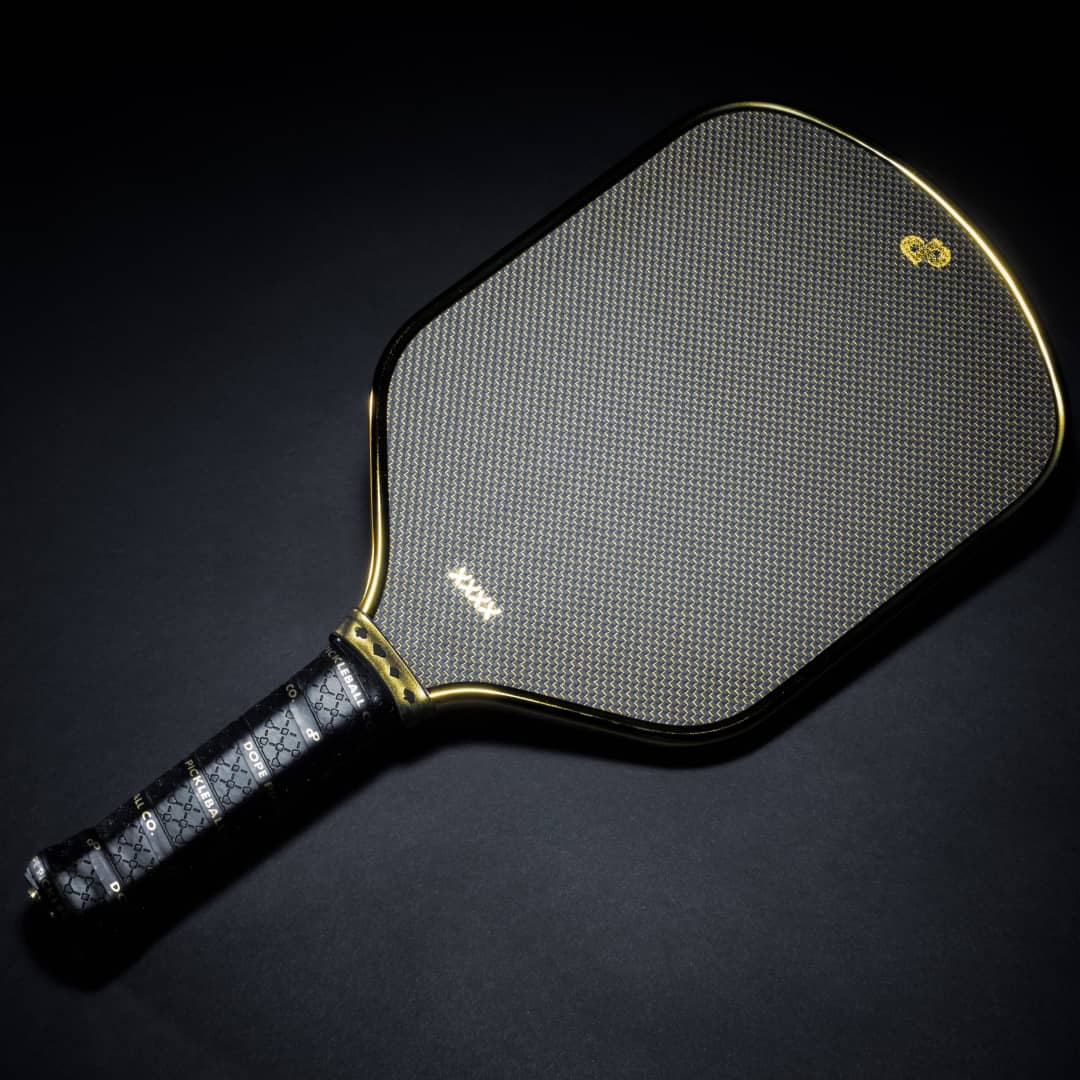
The High Roller Chrome Gold Paddle is a style-forward choice for recreational or unsanctioned play where permitted. It is not USA Pickleball approved. Check the current official approved-paddle list when sanctioned eligibility matters.

Frequently Asked Questions

What is the most common pickleball mistake?

Many players make decisions from poor balance—especially rushing through transition or attacking a ball below net height. Diagnose position before changing the swing.

How do you reduce unforced errors in pickleball?

Use larger targets, improve spacing, match shot choice to contact height, and measure one repeatable behavior at a time.

Should you always hit a third-shot drop?

No. Choose a drop, drive, or higher-margin response from return depth, contact quality, opponent position, and your team’s next-shot plan.

Where should you aim in doubles pickleball?

Useful targets include the feet, middle seam, uncomfortable hip zones, and open court when the angle has adequate margin.

Can a better paddle fix pickleball mistakes?

A comfortable paddle may support consistency, but equipment cannot correct poor shot selection, spacing, balance, or recovery.

Powered by Omni Themes