


The best pickleball dink drills isolate consistency, target control, movement, tempo, resets, attack-ball recognition, and live decision-making. A productive session does not chase a huge rally number at the expense of technique. It uses clear constraints, measurable outcomes, and difficulty that increases only while contact remains controlled.
This article is the practice progression. If you need the stroke foundation first, read how to master the pickleball dink for setup, mechanics, trajectory, targets, kitchen movement, and attack-ball criteria.
Before You Start: Define a Good Dink Repetition
Count a repetition only when the player:
- moves into balanced spacing;
- contacts in front with a stable paddle face;
- clears the net with intentional margin;
- lands in the assigned target or creates the assigned contact;
- recovers before the partner’s next strike.
A 50-ball rally filled with reaches and attackable pop-ups is not automatically better than ten purposeful contacts. Track quality and decision, not only streak length.
Drill 1: Straight-Ahead Consistency Ladder
Goal: build repeatable mechanics without large movement or angle.
Setup
Both players stand opposite each other near the kitchen line. Use a broad target extending from the sideline toward the middle.
Progression
- Cooperate for five controlled dinks.
- Reset and repeat for ten.
- Alternate forehand and backhand when possible.
- Add one step of lateral movement after consistency remains.
Score
One point for a target ball and one point for balanced recovery. Stop the rally after a pop-up rather than rescuing it with another poor contact.
Drill 2: Crosscourt Height Window
Goal: use the longer diagonal while controlling arc and opponent contact.
Setup
Players take opposite diagonal kitchen positions. Establish a safe visual height window above the net and a landing area that does not require a line-perfect ball.
Progression
- First set: generous arc and central crosscourt target.
- Second set: alternate shallow and deeper placements.
- Third set: move the partner one step wide, then recover toward middle.
Score
Count balls that clear the net, descend, and stay below an obvious attack height. A ball that lands in but sits high does not meet the drill’s purpose.
Drill 3: Three-Target Placement
Goal: choose a target instead of dinking on autopilot.
Setup
Use safe, flat visual markers outside the player’s landing path for three zones: crosscourt, middle, and down the line. Do not use a paddle case, bag, bottle, or raised cone where a player could step on it.
Progression
- Call the target before contact.
- Hit five to each zone from a stationary feed.
- Have the partner call a random target after the bounce.
- Finish with free choice and explain why the target fits.
Score
One point for the correct zone, one for safe net clearance, and one for recovery. This separates decision quality from simple outcome.
Drill 4: Move, Dink, Recover
Goal: maintain technique while moving laterally and entering the kitchen for a bounced ball.
Setup
The feeder alternates a neutral middle ball and a wider bounced ball. The hitter begins in a balanced kitchen-line position.
Progression
- Move the feet before setting the paddle path.
- Let the wide ball bounce and step into the kitchen if needed.
- Contact in front without reaching.
- Recover outside the kitchen when time permits.
- Split step before the next feed.
Score
Score the sequence only if contact and recovery are balanced. If the player crosses the feet or reaches, slow the feed.
Drill 5: Tempo Change Without a Pop-Up
Goal: handle changes in pace without changing the paddle face unpredictably.
Setup
Partners dink cooperatively. One calls “slow,” “neutral,” or “pressure” before sending the ball. “Pressure” means a slightly firmer, deeper dink—not an uncontrolled speedup.
Progression
- Use a repeating slow-neutral-pressure pattern.
- Randomize the call.
- Remove the call and read the incoming pace.
Score
The receiver earns a point for keeping the next ball below obvious attack height. The sender earns a point for changing tempo while retaining the assigned target.
Drill 6: Reset-to-Dink Transition
Goal: turn a firmer transition ball into a soft kitchen exchange.
Setup
One player begins in transition; the feeder stands at the kitchen and sends a moderate, controllable ball. The transition player resets into the kitchen, then both players continue with two dinks.
Progression
- Feed to the forehand side.
- Feed to the backhand side.
- Alternate body and hip zones.
- Add one controlled step forward after a low reset.
Score
Count a sequence only when the reset removes pace, lands low enough to prevent an easy attack, and is followed by two controlled dinks.
Drill 7: Build, Recognize, Attack
Goal: distinguish a true attack ball from a ball that merely feels tempting.
Setup
Play a half-court or skinny-court kitchen game. The rally begins cooperatively, then becomes competitive.
Attack criteria
A player may attack when the contact is:
- high enough to travel forward without first floating up;
- in front and balanced;
- connected to a clear target;
- followed by immediate recovery.
Do not use an arbitrary “six inches above the net” rule. Height is one factor; spacing, direction, balance, and opponent position also matter.
Score
Two points for winning after a correctly identified attack ball, one for winning through patience, and minus one for attacking a low ball into an error. The constraint makes decision quality visible.
A 40-Minute Dink Practice Plan
| Time | Drill | Primary metric |
|---|---|---|
| 5 minutes | Straight consistency | Target plus recovery |
| 5 minutes | Crosscourt height window | Low opponent contact |
| 6 minutes | Three-target placement | Called-zone accuracy |
| 5 minutes | Move, dink, recover | Balanced sequence |
| 5 minutes | Tempo change | No pop-up response |
| 6 minutes | Reset-to-dink | Three-ball sequence |
| 8 minutes | Build-recognize-attack | Correct attack decision |
Adjust time, volume, and intensity to the players. Stop when technique or safe movement deteriorates.
DOPE Gear for a Focused Dink Session
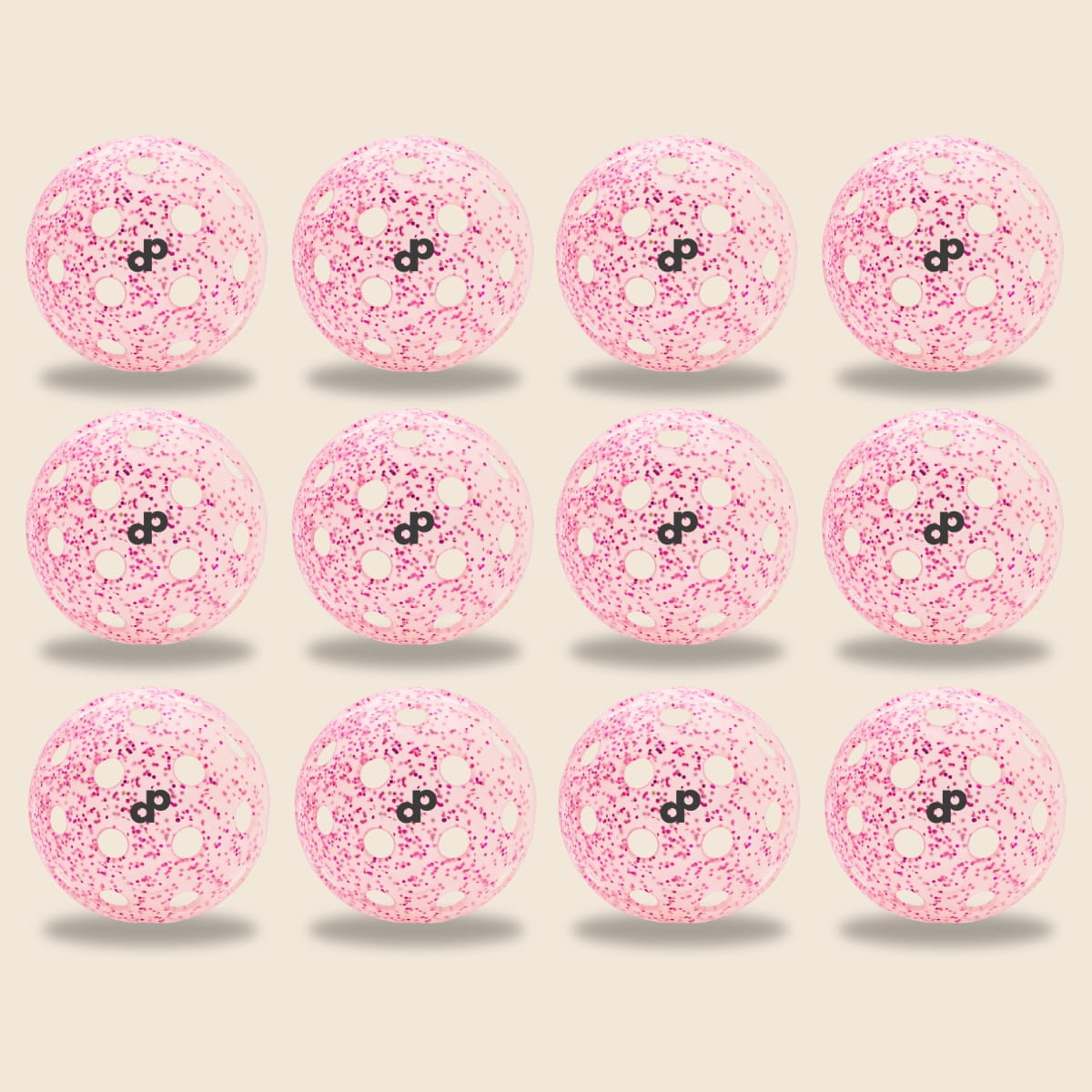
Use enough matching balls to keep feeds consistent and retrieval efficient. The Pink Glitter-Infused Ball, Yellow Glitter-Infused Ball, and Pink & Yellow Bundle offer multiple color and quantity options.
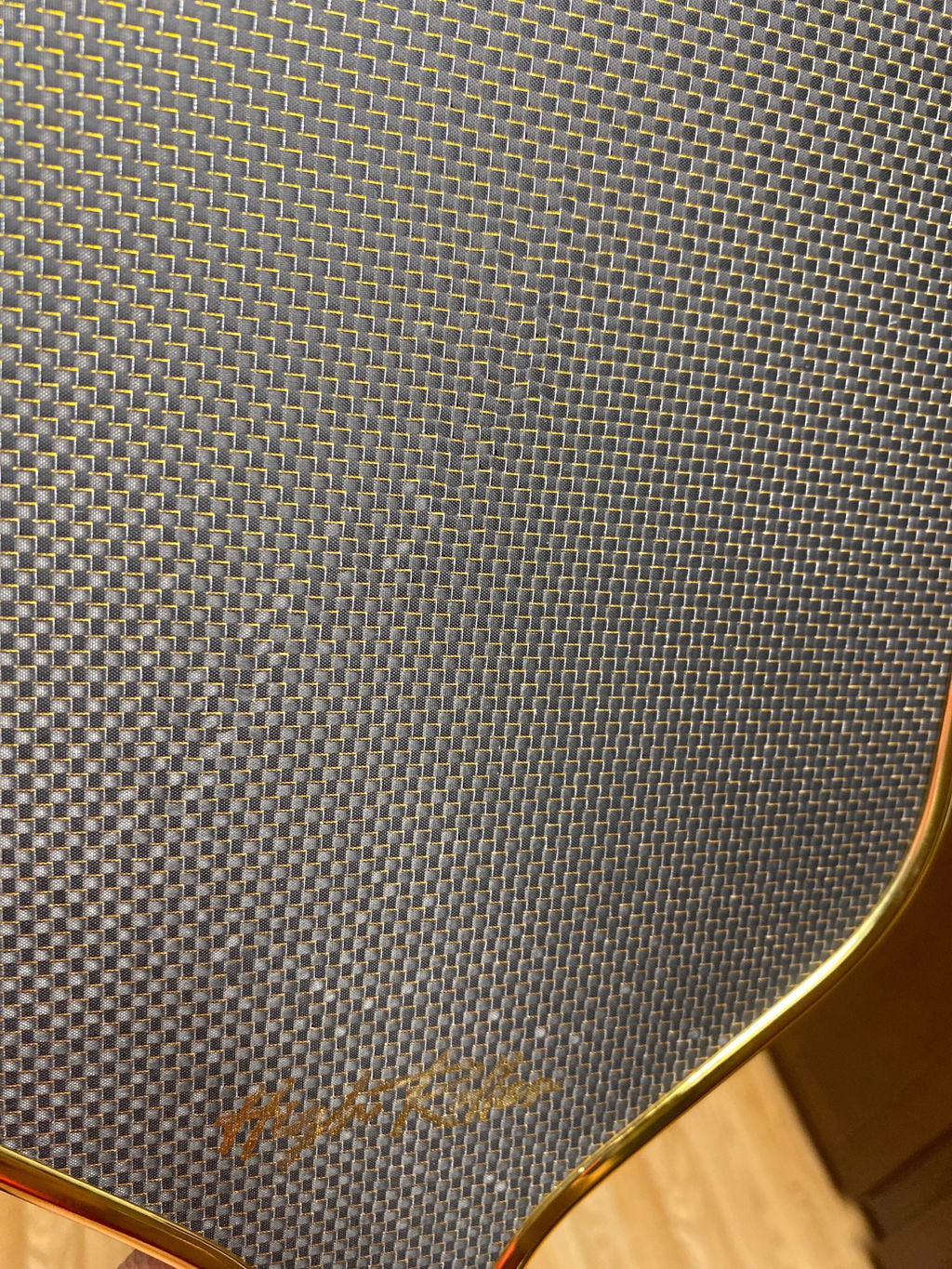
The High Roller Paddle Travel Case keeps the collection organized off court. The High Roller Chrome Gold Paddle is for recreational or unsanctioned play where permitted and is not USA Pickleball approved. Equipment does not replace drill design or feedback.
Frequently Asked Questions
What is the best pickleball dink drill?
The best drill matches the weakness: consistency, target control, movement, tempo, resets, or attack-ball recognition.
How many dinks should you practice?
There is no universal number. Use sets with a quality metric and stop when contact, recovery, or safe movement breaks down.
Should dink drills be cooperative or competitive?
Start cooperatively to isolate technique, then add target pressure and competitive decision-making after the pattern remains controlled.
What makes a dink attackable?
Useful criteria include contact height, forward spacing, balance, target availability, and the ability to recover after the attack.
Can you use a bag or paddle case as a dink target?
Do not place raised objects where players may step. Use safe flat markers outside foot paths and keep bags and cases off the playing area.
Share:
Pickleball Paddle Buying Guide: What the Specs Actually Mean
5 Biggest Pickleball Beginner Mistakes—and How to Fix Them