

You can recognize a High Roller paddle visually, but appearance alone is not authentication. The active listing documents a combination of chrome-gold edge, pressed foil, grip, metal coin end cap, logo details, and an NFC feature. Use those cues to identify the product family, then use the official sales record and current product information to verify what you are buying.

This guide uses exact Shopify product photographs. It does not offer a counterfeit certification process or claim that one visual cue proves authenticity.

Cue 1: The Chrome-Gold Perimeter

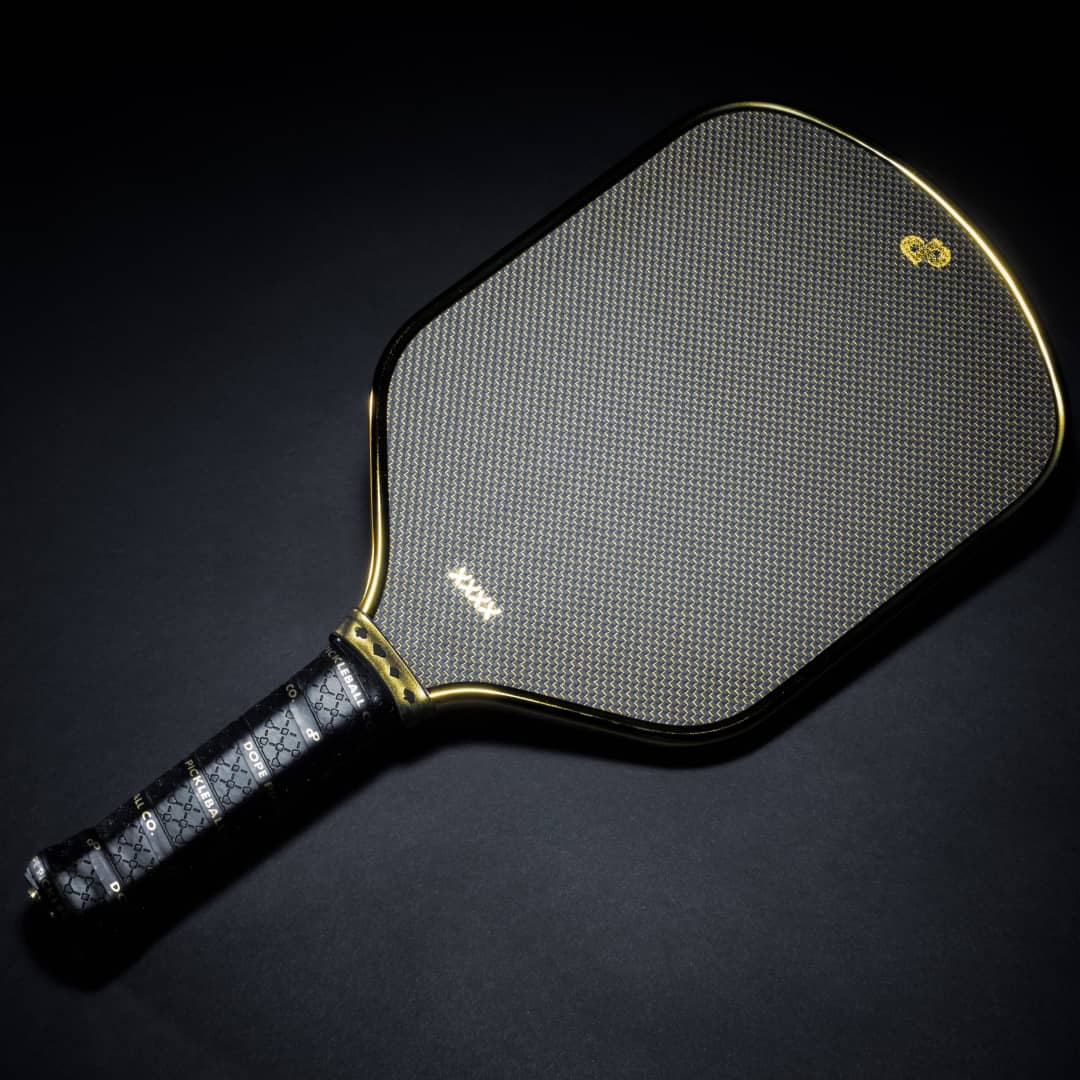
The active High Roller Chrome Gold Paddle listing describes an ornamental electroplated chrome-gold edge. At distance, that reflective perimeter may be the first visible cue because it catches light as the paddle rotates.

Reflection varies with lighting, background, exposure, and angle. A dark or dull appearance in shade does not automatically identify a different product, and a bright edge on another paddle does not prove it is a High Roller.

Cue 2: The Pressed Gold Foil Face

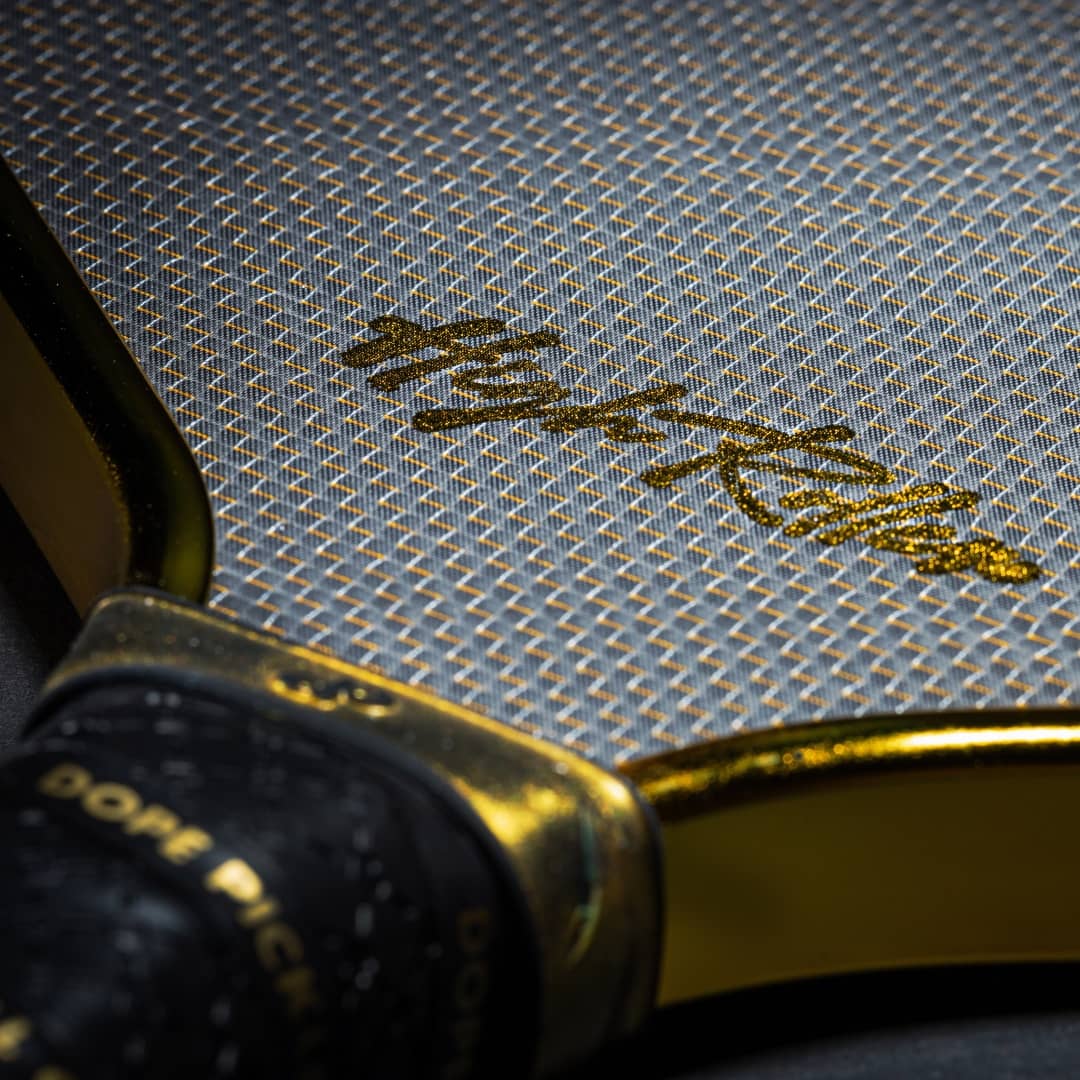
The current listing names pressed gold foil on the face. Use close product views to compare layout, surface detail, logos, and the relationship between the face and perimeter. A distant court view cannot establish those details.

Do not rely on a generated image, stylized illustration, or heavily edited social post. It can alter foil density, logo placement, edge width, shape, or color.

Cue 3: The Handle and Coin End Cap

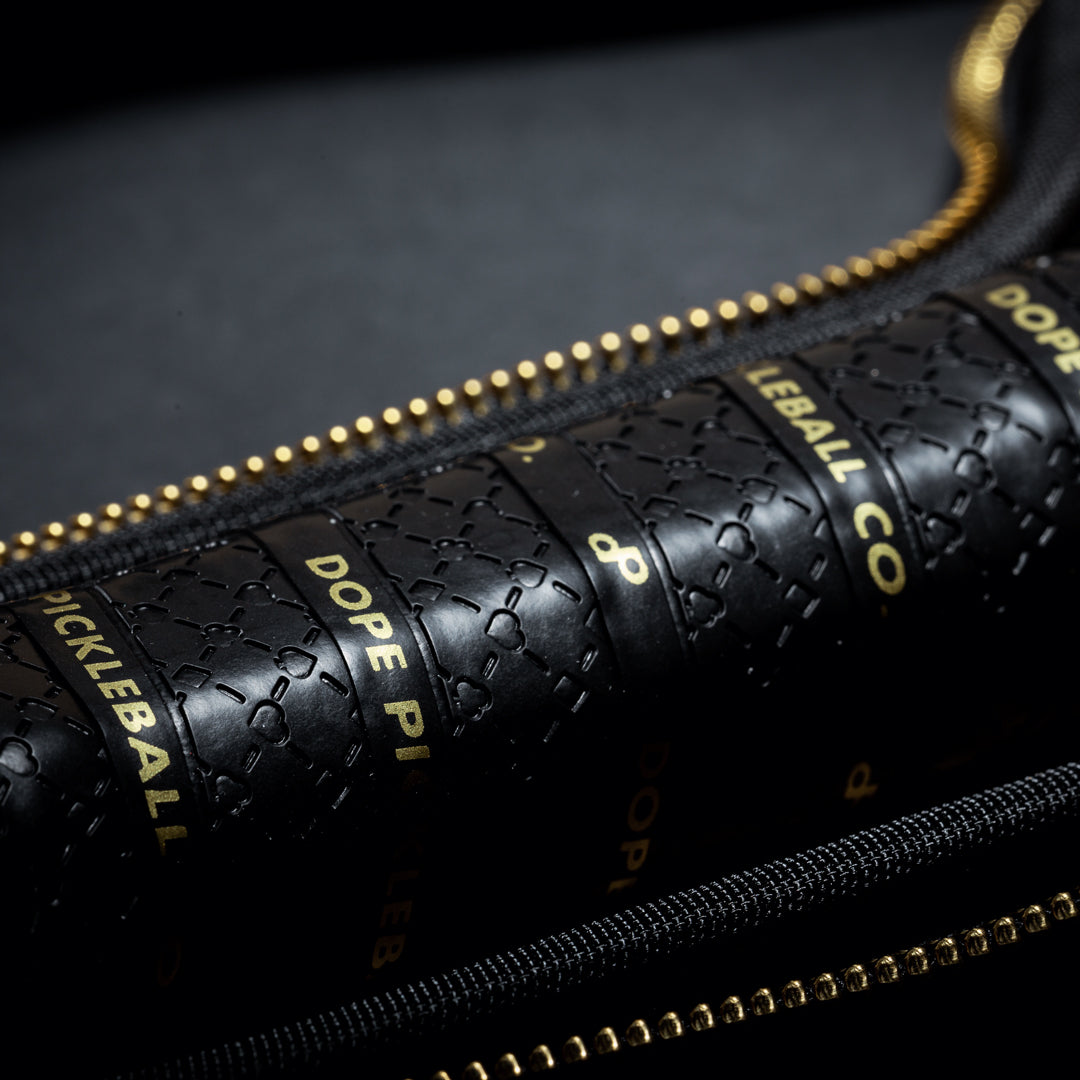
The listing describes a custom grip and metal coin end cap. These closer cues help distinguish the complete product design from a generic gold-face paddle. Compare the delivered handle with the active record before replacing the grip or making permanent changes.

Cue 4: The NFC Feature—Without Overclaiming It

The live product page names an NFC authenticity feature. This article does not invent a tap flow, destination, warranty, or certification outcome that the editorial description does not document. Follow the instructions provided with the product or current seller support rather than assuming every NFC interaction behaves the same.

Cue 5: The Active Store Record

The most reliable purchase context is the active DOPE storefront record, with current title, handle, exact photographs, options, description, order confirmation, and seller support. A paddle seen across a court can be recognized; a paddle offered for sale should be verified through a complete transaction record.

Save the product link and order confirmation. When the item arrives, compare the selected product, shipping record, packaging, face, edge, handle, end cap, and included information before use.

Recognition Is Not Approval

The High Roller is not USA Pickleball approved. Identifying it accurately does not change eligibility. Use it for recreational or unsanctioned play where permitted. Sanctioned players should search exact models on the current official approved-paddle list.

Recognition Is Not a Performance Test

The chrome edge, foil, grip, end cap, or NFC feature does not prove more power, spin, control, stability, comfort, safety, or durability. Those claims need complete technical data and valid testing. Visual identity can be strong without becoming an equipment ranking.

Related High Roller Products

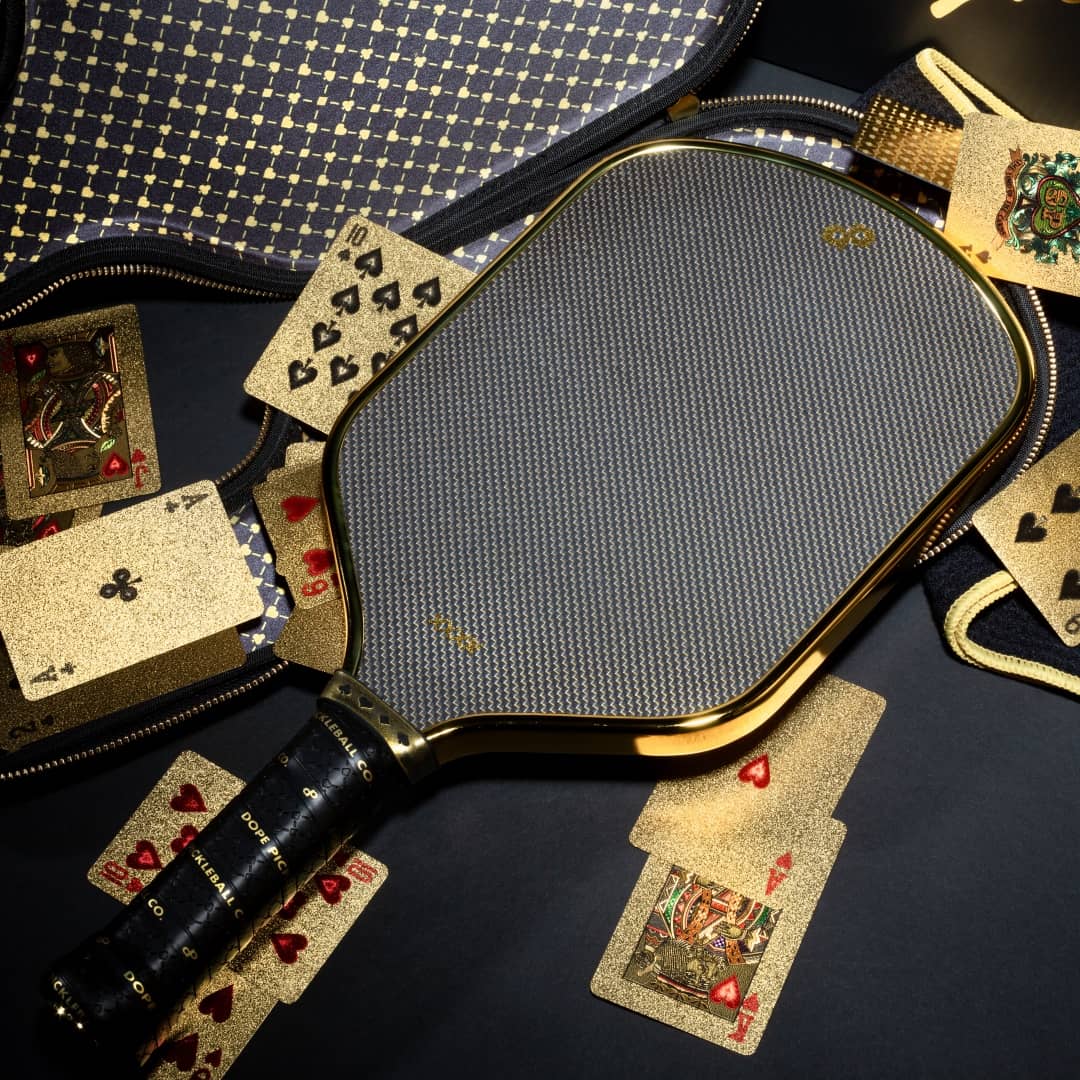
The High Roller Paddle Travel Case is tailored for the paddle and described with a black vegan-leather exterior, suede interior, EVA reinforcement, gold YKK zipper, and logo details. It can help maintain a consistent owner setup, but it does not authenticate another paddle by proximity.

The High Roller Club Bundle currently presents a multi-item set around the paddle, case, shirt, sunglasses, tumbler, socks, balls, and branded extras. Confirm the current inclusion list and order record.

The High Roller sunglasses listing describes polarized lenses and UV protection. It does not state ASTM F803 or ANSI impact certification, lens material, or a numerical UV category, so treat them as sunglasses—not certified protective eyewear.

Gold glitter balls, black-and-gold hats, and apparel repeat the palette. They are collection cues, not paddle-authentication evidence.

High Roller Identification Checklist

  1. Start with the current active product page.
  2. Compare full, angled, face, edge, handle, and end-cap photographs.
  3. Confirm the product handle and seller record.
  4. Read the current NFC instructions supplied with the product.
  5. Save the order confirmation and selected option.
  6. Inspect the delivered item before grip changes or play.
  7. Contact current seller support when a material mismatch appears.

Buyer Verification Versus Court Recognition

A spectator needs only enough information to say that a paddle resembles the High Roller design. A buyer needs the active seller record, exact product handle, current photographs, selected option, order confirmation, delivered product, and support path. Do not use the lower court-recognition standard for a financial transaction.

A tournament official needs a different answer again: exact-model eligibility under the event rules. Since the High Roller is not approved, visual accuracy does not make it eligible.

Common Identification Errors

  • Color-only matching: gold is not a complete product identity.
  • Single-photo matching: one angle can hide the handle, edge, or face.
  • Collection proximity: a matching case or ball does not authenticate a paddle.
  • Generated-image matching: a plausible render can alter precise details.
  • NFC assumption: do not invent a result without current instructions.
  • Approval confusion: authenticity and sanctioned eligibility are separate.

Delivered-Product Readback

Before play, photograph the delivered paddle under neutral light for your own order record, leaving serial, order, or personal data private. Compare both faces, edge, handle, end cap, logos, packaging, and included instructions with the active listing. Check the NFC feature only as documented by current product materials or seller support.

If a detail differs materially, do not sand, repaint, regrip, add weight, or discard packaging. Preserve the condition and contact the store through its current support path. Verification is strongest before the product is modified.

Reseller and Screenshot Caution

A screenshot may show a real product while omitting date, seller, stock, generation, or terms. A reseller title can copy the High Roller wording without reproducing the complete record. Start at the active DOPE storefront and use any secondary listing only after reconciling it with that source.

Use Both Full and Detail Views

A full view confirms silhouette, face layout, edge relationship, and handle proportion. Detail views confirm foil, grip, end cap, and logos. Neither is sufficient alone. Compare the same side and angle when possible, and remember that reflection can shift while the physical arrangement should remain consistent.

What You Can Say From Across the Court

You can say, “That looks like the High Roller’s chrome-gold design.” You cannot confirm authenticity, approval, generation, ownership, condition, or performance from a distant glance. Move from recognition to evidence before making a purchase or eligibility decision.

That boundary protects both the player and the DOPE brand. The real product is distinctive enough to be shown exactly.

Frequently Asked Questions

How can you recognize a High Roller paddle?

Look for the documented chrome-gold edge, pressed gold foil, grip, metal coin end cap, and current product details, then verify through the active store record.

Does the chrome edge prove authenticity?

No. Appearance supports recognition, but authenticity requires the complete product and transaction record plus current seller guidance.

What does the NFC feature do?

The listing names an NFC authenticity feature. Follow current product instructions or seller support; this article does not invent an undocumented tap flow.

Is the High Roller USA Pickleball approved?

No. It is for recreational or unsanctioned play where permitted.

Can you verify a paddle from across the court?

You can recognize visual cues, but you cannot confirm authenticity, approval, condition, or performance from a distant glance.

Powered by Omni Themes