


- by Dope Pickleball Co.
Choosing the Best Pickleball Paddle: A Guide for Every Player
- by Dope Pickleball Co.
There is no single best pickleball paddle for every player. The right choice depends on grip comfort, weight distribution, shape, surface, core, budget and whether you need a model that appears on the current USA Pickleball approved equipment list for sanctioned competition. A useful buying process starts with your needs, not a universal ranking.
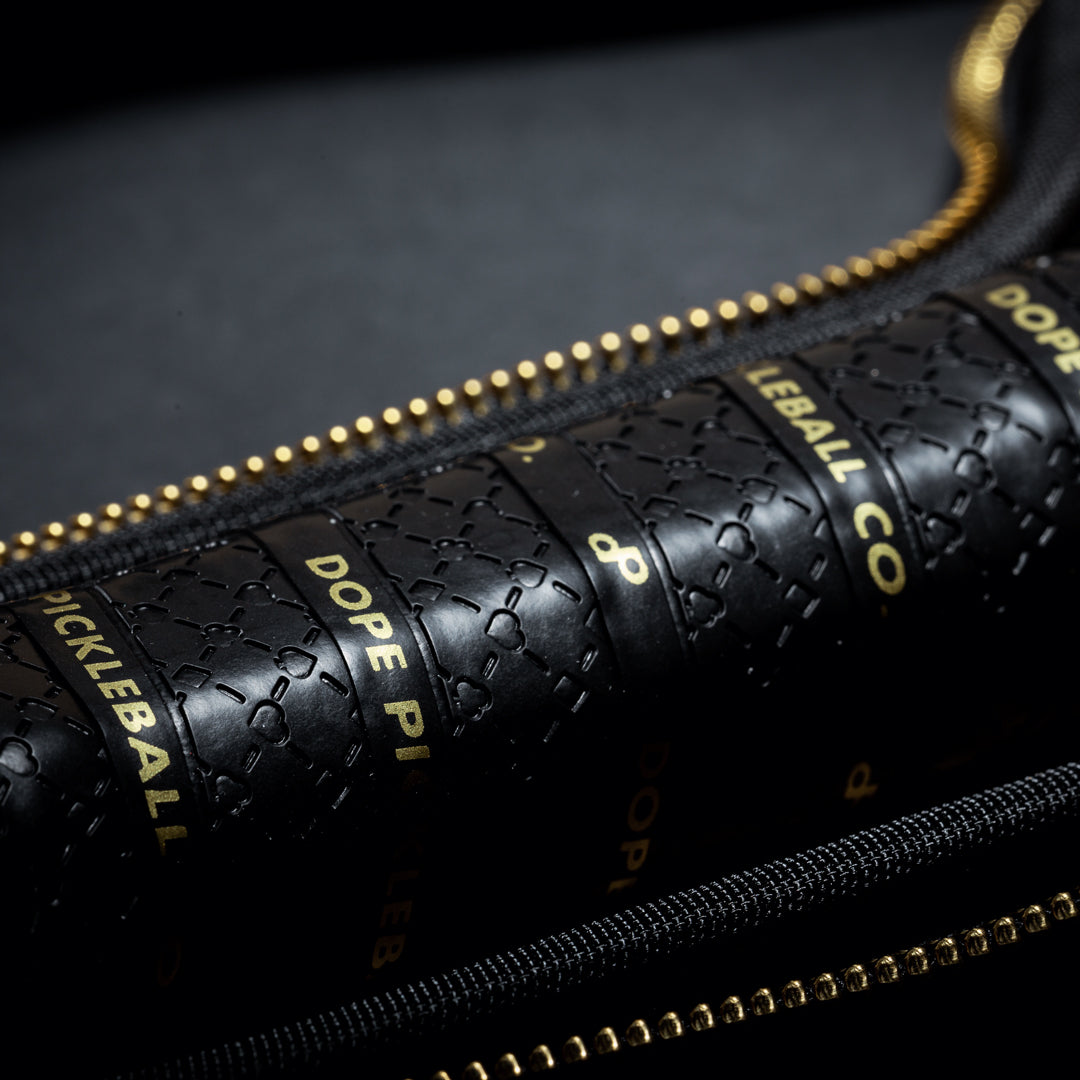
A grip that feels secure without excessive squeezing can help you control the face of the paddle. Compare the published grip circumference and handle length with a paddle you already find comfortable. If possible, test the paddle before committing to long sessions.
Total weight is only part of the feel. Two paddles with the same listed weight can swing differently if one carries more mass toward the head. Players who prioritize quicker hand exchanges may prefer a more maneuverable feel; players seeking stability may accept more swing weight. Published specifications and an in-person demo are more reliable than broad labels such as “beginner” or “pro.”
Elongated shapes can offer extra reach, while wider shapes can provide a larger lateral hitting area. Handle length also matters for two-handed backhands. Check the actual dimensions instead of assuming every paddle in a shape category feels the same.
Brands use terms such as raw carbon fiber, fiberglass, composite and polymer honeycomb. Those words describe materials, not guaranteed outcomes. Surface texture, construction, thickness, edge design and manufacturing tolerances work together. Treat unqualified promises of “maximum spin,” “more power” or “perfect control” cautiously unless a brand provides a clear testing method.
For sanctioned play, search the exact brand and model on the current USA Pickleball approved paddle list. Approval can be model-specific, and a similar product name or appearance is not proof. For recreational play, also check the facility or league’s local rules.
Those labels are useful shortcuts, but they are not standardized grades. A player who generates pace easily may value touch and maneuverability; another may prefer a firmer response. Technique, ball, temperature and court conditions also affect the result. A demo session with the same ball and court you normally use is the clearest comparison.
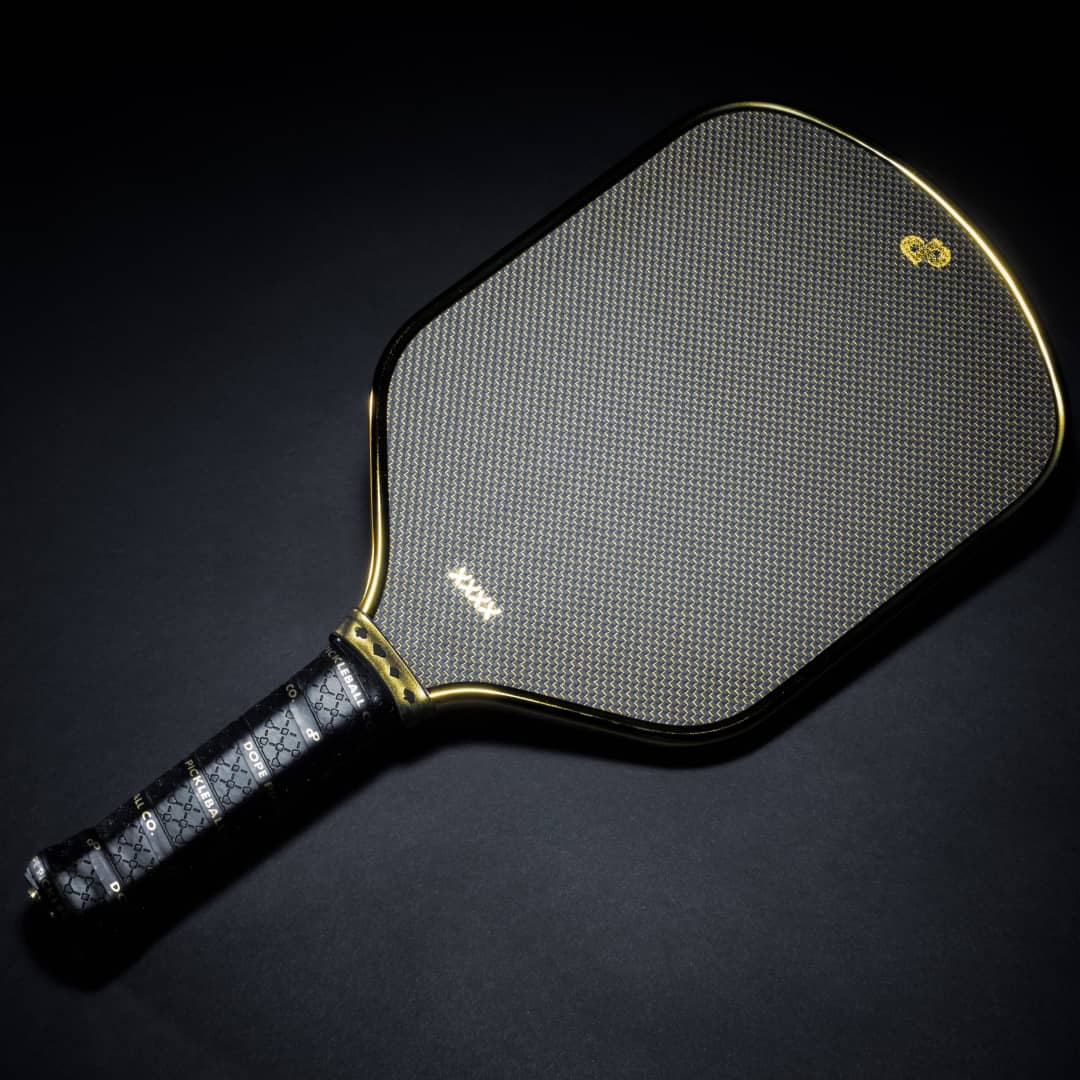
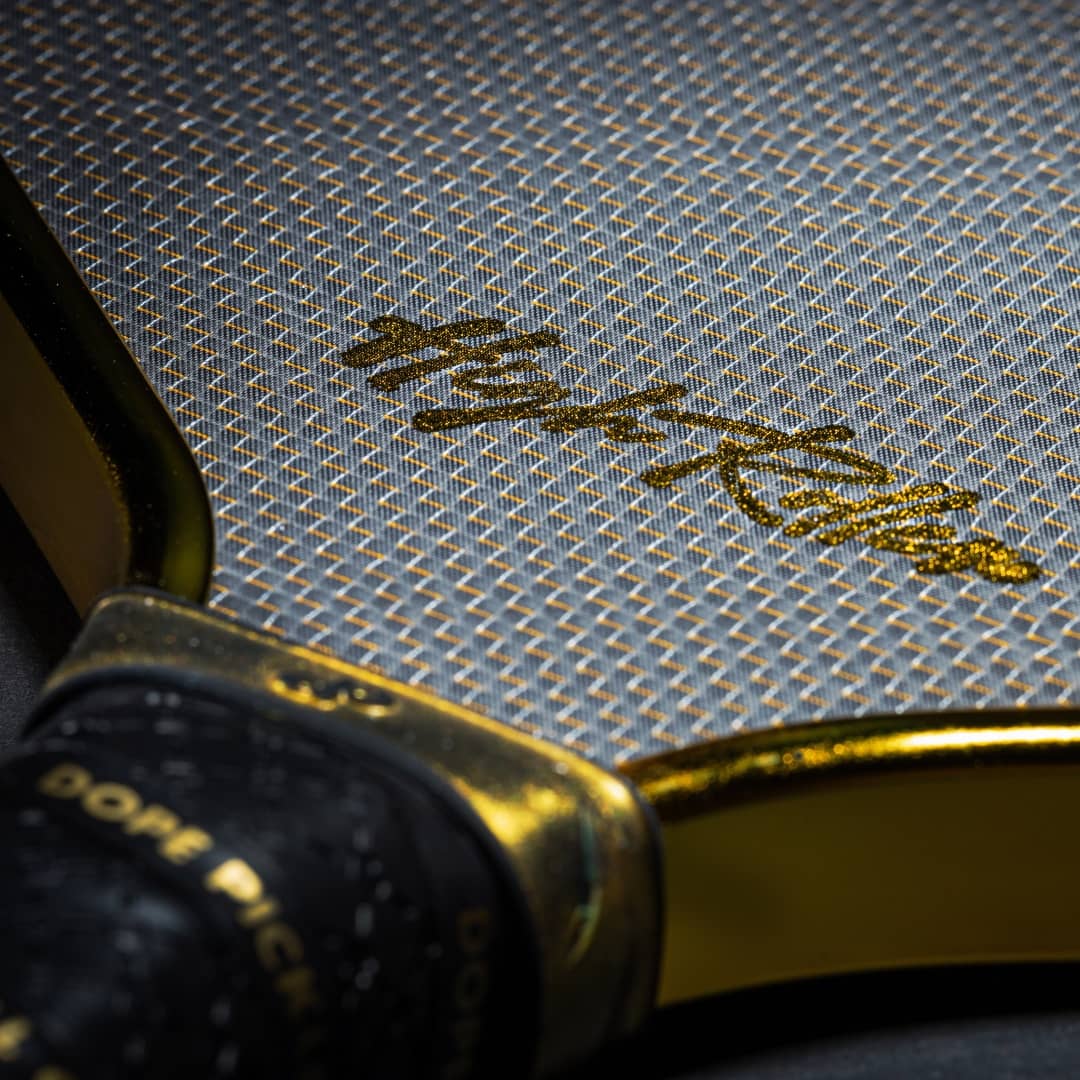
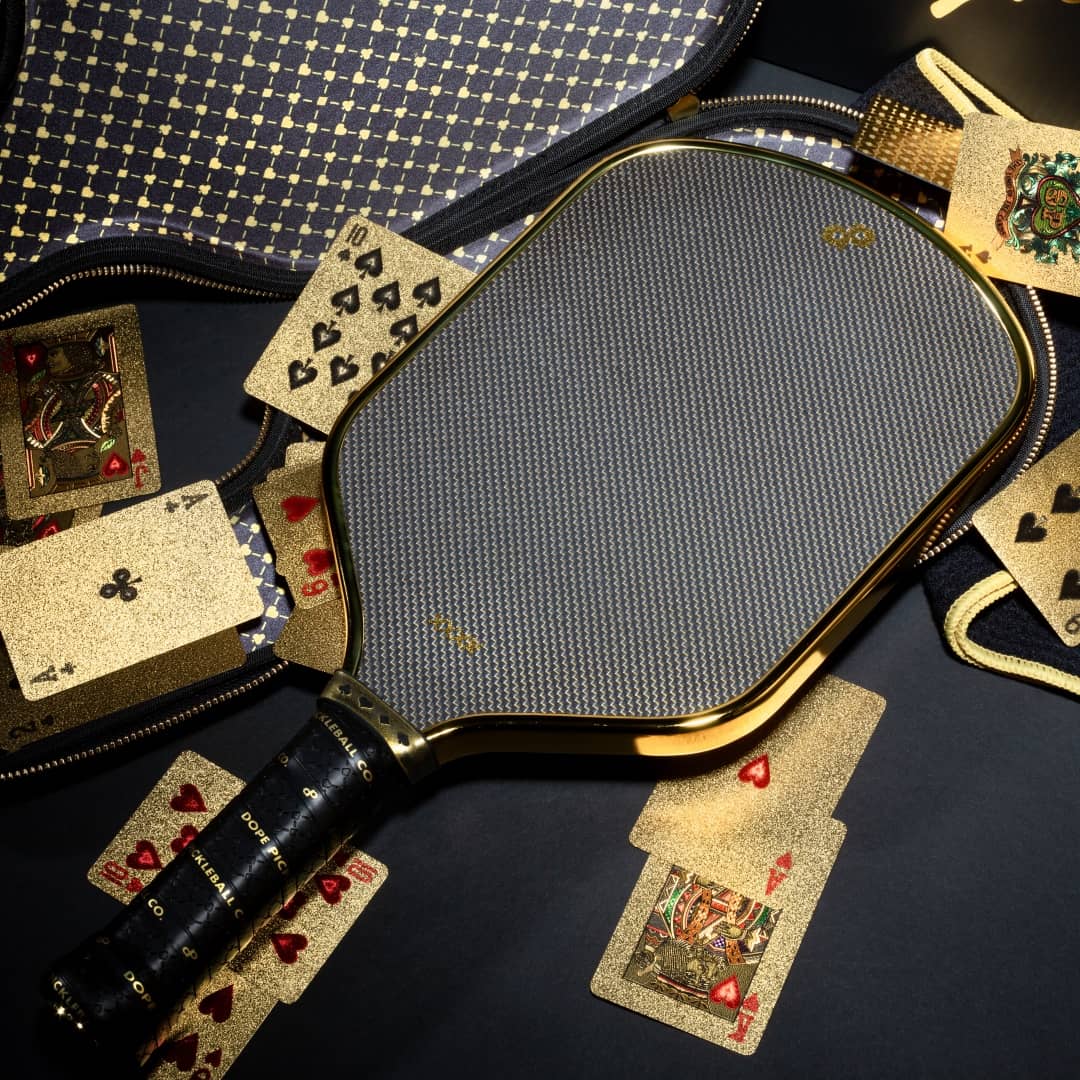
Dope Pickleball is design-led, so appearance may be part of your decision. If a chrome-gold aesthetic fits your style, review the current photos, published specifications, price and availability on the High Roller pickleball paddle page. Compare those facts with the checklist above; this guide does not claim that one Dope model is the best fit for every player or approved for every competition.
A beginner should prioritize a comfortable grip, manageable feel, clear specifications and a realistic budget. A widely marketed skill-level label is less useful than testing whether the paddle is easy to position and comfortable over a full session.
No. Price can reflect materials, construction, design, distribution and brand positioning, but it does not guarantee a better fit for your swing or goals.
There is no universal schedule. Inspect the edge, face, handle and sound for meaningful changes, follow the manufacturer’s care guidance, and replace equipment that is damaged or no longer performs consistently for you.


Share:
Best Pickleball Sunglasses: Why Eye Protection on the Court Is Non-Negotiable
The Best-Looking Pickleball Gear of 2026