

Pickleball sunglasses and impact-rated sports eye protection solve different problems. Tinted or polarized sunglasses can help with sunlight and glare when their lenses and fit suit the conditions, while sports eye guards are designed and tested for impact protection. Do not assume ordinary sunglasses—even well-made ones—meet a protective-eyewear standard unless the product explicitly identifies that certification.

This guide explains lens purpose, impact ratings, fit, coverage, polarization, prescription needs, fogging, care, and where DOPE’s High Roller Performance Sunglasses fit honestly: a polarized, UV-protection style product whose current listing does not state ASTM F803 sports-eye-guard certification.

Sunglasses and Sports Eye Guards Are Not Interchangeable

Outdoor pickleball creates at least two separate eyewear needs:

  • Light management: reduce brightness, glare, or UV exposure and maintain usable contrast.
  • Impact protection: help protect the eye area from a ball, paddle, collision, or other impact.

A product can address one without proving the other. Polarized lenses describe glare management; they do not establish impact resistance. UV protection describes ultraviolet transmission; it does not establish that a frame or lens will withstand a ball strike.

Prevent Blindness recommends lensed polycarbonate protectors for racquet sports and says eye guards should be labeled ASTM F803 approved. Its pickleball-specific guidance also warns that ordinary prescription glasses, sunglasses, and occupational safety glasses should not automatically be treated as adequate sports protection.

How to Check Pickleball Impact Protection

Look for an explicit, current certification on the product, packaging, or manufacturer documentation. Do not infer it from:

  • a wraparound shape;
  • the word “performance”;
  • polycarbonate-looking lenses;
  • dark tint or polarization;
  • general “protective” marketing;
  • a secure fit.

Ask the seller for the exact standard, product model, and test documentation. If you have vision in only one eye, prior eye surgery, an eye condition, or prescription needs, consult an eye-care professional for individualized advice.

Frame and lens must work as a system

A strong lens in an unsuitable frame may dislodge or transmit force poorly. Sports eye guards use a tested combination of lens material, retention, coverage, and frame geometry. Side gaps, sharp edges, exposed hardware, and a loose bridge can matter during impact or collision.

UV Protection, Tint, and Polarization

UV protection

Tint darkness is not the same as ultraviolet filtering. Use product documentation that identifies UV protection rather than judging by color. The High Roller listing states UV protection, but it does not publish a numerical transmission category in the current description.

Polarization

Polarized lenses can reduce reflected glare from horizontal surfaces. Some players prefer that outdoors; others prefer a different lens because court color, ball color, cloud cover, and personal visual perception change the experience. Test the lens in conditions close to your actual play.

Lens tint

Gray, brown, amber, rose, yellow, and clear lenses can alter brightness and perceived contrast differently. There is no universal “best pickleball lens color.” Evaluate:

  • the ball color;
  • court and fence background;
  • sun angle;
  • overcast versus full sun;
  • day, dusk, or artificial lighting;
  • your color perception and prescription.

Never wear a tint that makes the ball harder to identify simply because it matches an outfit.

Fit, Coverage, and Court Movement

Eyewear should remain stable through split steps, forward bends, quick turns, and perspiration without creating painful pressure points.

Fit test

  1. Look down and shake the head gently; the frame should remain stable.
  2. Move into ready position and turn left and right.
  3. Check whether eyelashes touch the lens.
  4. Confirm the bridge and temples do not pinch.
  5. Test peripheral vision with the paddle in ready position.
  6. Wear any hat or headband you use on court and check interference.

A tight frame is not automatically a secure sports frame. Comfort matters because eyewear that causes headaches or slipping is likely to be removed during play.

Coverage

Wrap and side coverage can reduce stray light and exposed angles, but too much curvature can create visual distortion for some wearers. Move the eyes across the entire lens and look for warping near the edges.

Prescription Pickleball Eyewear

Players who need corrective lenses should not compromise clear vision to wear a non-prescription style frame. Options may include:

  • prescription sports eye guards;
  • manufacturer-approved prescription inserts;
  • impact-rated frames built for prescription lenses;
  • contact lenses paired with appropriate sports eye protection, if approved by an eye-care professional.

Do not install unapproved lenses into a frame and assume the original safety performance still applies. Ask the optician how the lens, frame, and retention system are certified together.

Build an Eyewear Plan for Changing Conditions

Condition Question to ask Common mistake
Full sun Does the lens manage brightness and UV while preserving ball contrast? Choosing tint by appearance alone
Overcast Does the lens become too dark? Keeping one dark lens for every condition
Dusk Is there enough visible-light transmission? Wearing a lens that hides the ball
Indoor Is clear impact-rated protection more appropriate? Assuming sunglasses are necessary indoors
Wind or dust Does coverage help without fogging? Sacrificing ventilation completely

If you move between light conditions, consider separate purpose-built pairs or a verified interchangeable-lens system rather than expecting one fixed tint to solve every court.

Fogging, Cleaning, and Storage

Fog and scratches can reduce visibility enough to become a court hazard.

  • Clean lenses with the manufacturer-approved method and a clean microfiber cloth.
  • Do not use an abrasive shirt, paper towel, or dirty cloth.
  • Use only compatible anti-fog products.
  • Store eyewear in its case instead of loose beside paddles and keys.
  • Inspect the bridge, temples, screws, lens seating, and scratches before play.
  • Replace damaged protective eyewear according to manufacturer guidance, especially after impact.

Where the High Roller Sunglasses Fit

The live High Roller Performance Pickleball Sunglasses listing describes polarized black lenses, UV protection, a lightweight gold-and-black frame, ergonomic nose pads, temple tips, and an included black leatherette case. Those are the source-backed product facts used here.

The current product page does not state ASTM F803 certification, an ANSI impact rating, lens material, or a numerical UV category. Therefore, this article does not present the High Roller sunglasses as impact-rated sports eye guards. Choose them for the listed sunlight-management and style features; choose certified protective eyewear when impact protection is the requirement.

Pair the sunglasses with the High Roller Black & Gold Performance Hat or the High Roller Club Bundle for the full visual collection. Product availability can change, so the live page is authoritative.

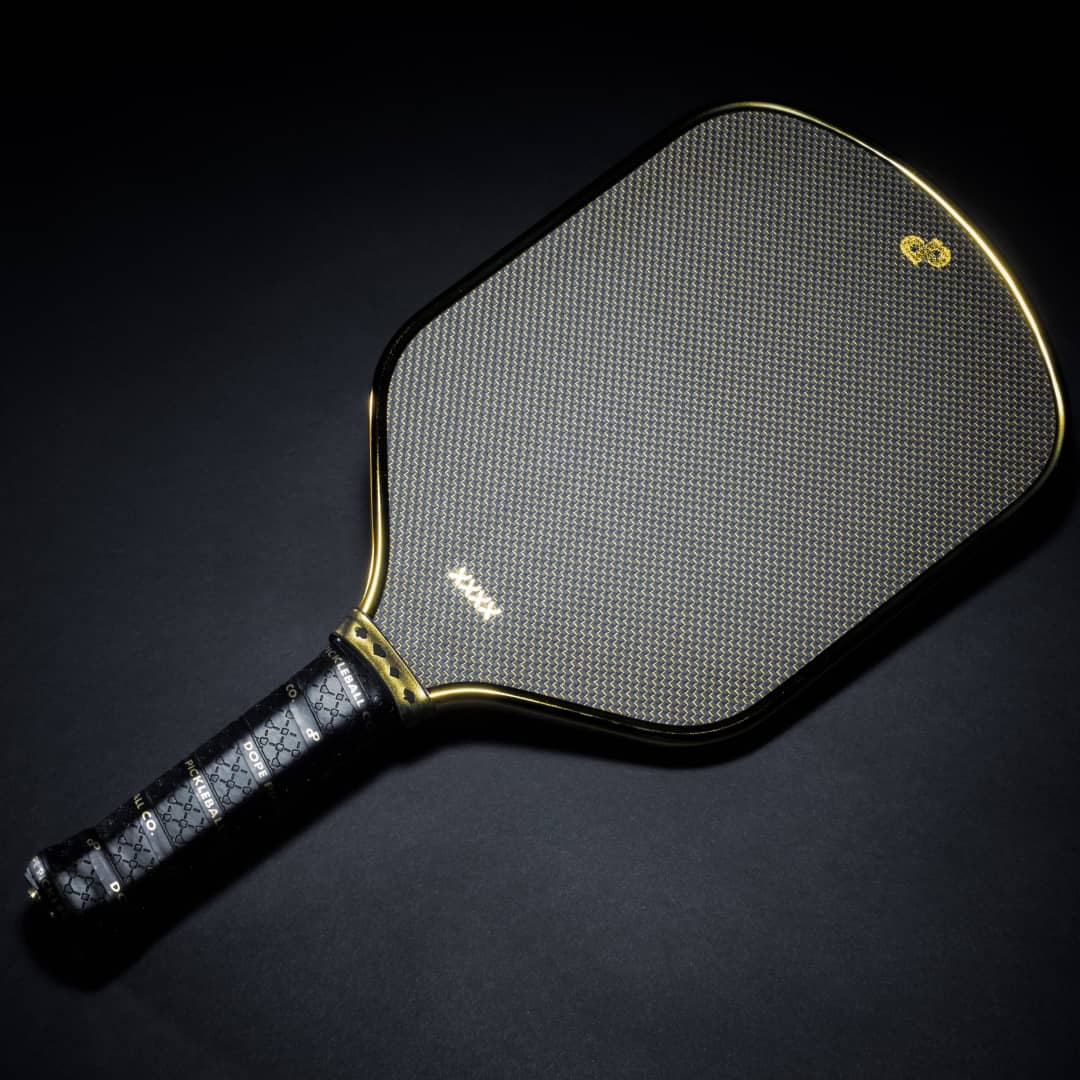
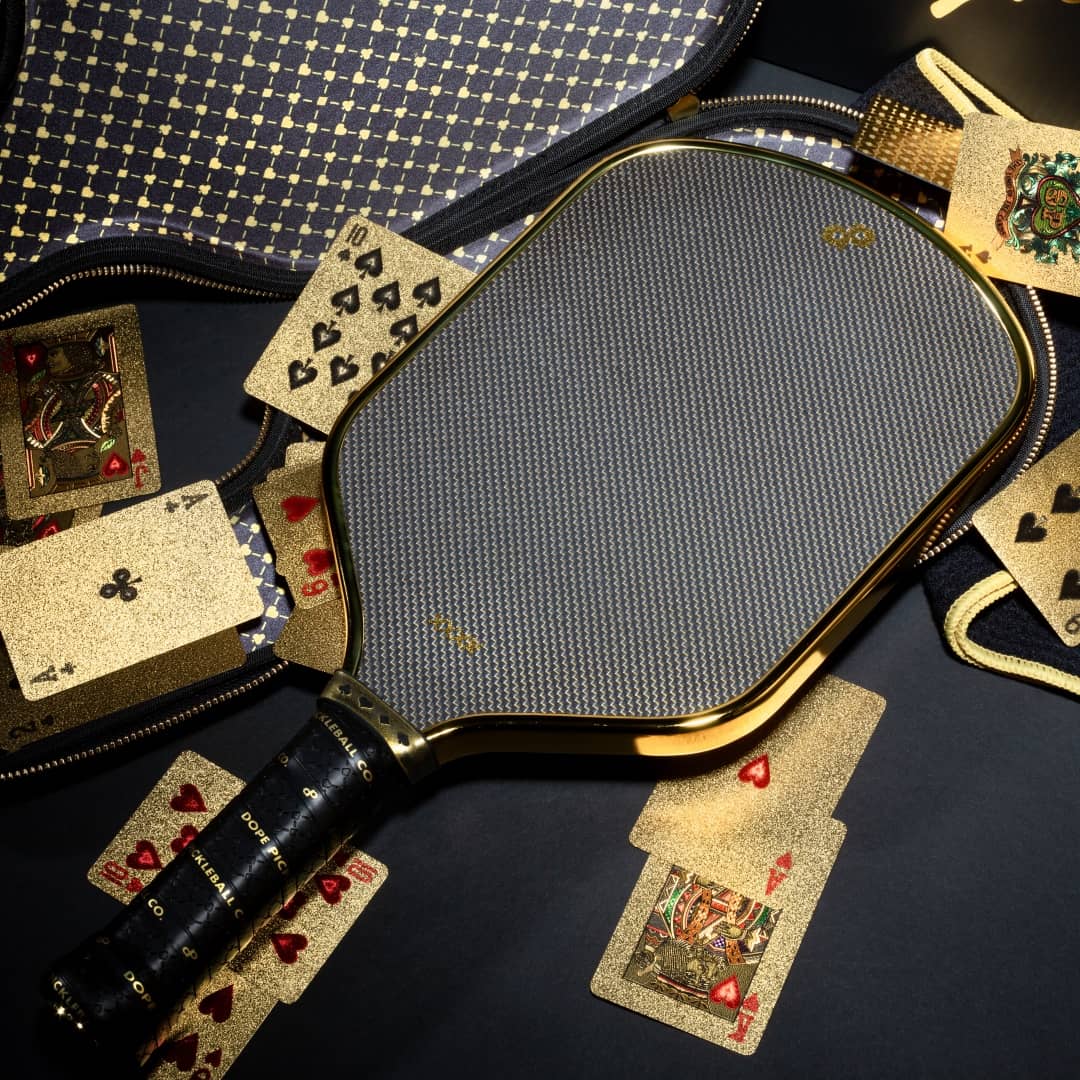
The bundle includes the High Roller paddle, which is not USA Pickleball approved. Use that paddle only for recreational or unsanctioned play where permitted; select an exact currently approved model for sanctioned competition.

Frequently Asked Questions

Are sunglasses enough eye protection for pickleball?

Not automatically. Ordinary sunglasses may manage light but should not be treated as impact-rated sports eye protection without explicit certification.

What certification should pickleball eye guards have?

Prevent Blindness recommends lensed polycarbonate protectors for racquet sports labeled ASTM F803 approved. Confirm the exact product and current standard.

Are polarized lenses good for pickleball?

They can reduce reflected glare, but preference depends on court, ball, lighting, lens quality, and individual vision. Test them in real playing conditions.

Do the High Roller sunglasses have UV protection?

The current product listing states UV protection and polarized lenses. It does not publish a numerical UV category in the description.

Are High Roller sunglasses ASTM F803 certified?

The current product listing does not state ASTM F803 certification, so this guide does not claim that they are certified sports eye guards.

Powered by Omni Themes