

Pickleball and padel both use solid rackets or paddles and underhand-style serves, but the court changes everything.

Pickleball is played on an open 20-by-44-foot court with a 7-foot non-volley zone. Padel is played on an enclosed 10-by-20-meter court where walls and fencing can remain part of the rally after the ball bounces.

That one design difference changes movement, shot selection, access, equipment, and the way a point develops. Here is the complete comparison using current USA Pickleball and International Padel Federation rules.

Pickleball vs. Padel at a Glance

Category Pickleball Padel
Court 20 × 44 feet; open boundaries 10 × 20 meters; fully enclosed
Walls Not part of standard play Part of rallies after a legal bounce
Equipment Solid paddle and plastic ball with holes Perforated padel racket with wrist cord and pressurized padel ball
Serve Legal volley serve or drop serve; one attempt Bounce first, hit at or below waist; two attempts
Signature rule Two-bounce rule and non-volley zone Enclosure rebounds and wall defense
Typical format Singles or doubles; doubles common recreationally Standard game organized around pairs
Scoring Side-out or approved rally-scoring format Tennis-style games and sets, with current FIP scoring options

The Biggest Difference: Open Court vs. Enclosed Court

A pickleball boundary ends the playable space. If the ball lands outside the lines, it is out. Fences and walls are not used to continue a standard rally.

A padel court is completely enclosed. After a legal bounce, players can use the glass or wall rebound as part of the point. They learn when to let a ball travel past the body, read the rebound, and return it after it comes off the enclosure.

This makes padel feel less like “pickleball on a bigger court” and more like a distinct sport with its own geometry.

Court Size and Construction

Pickleball uses the same 20-by-44-foot playing court for singles and doubles. USA Pickleball recommends additional run-off space beyond the lines, but the playable boundaries stay compact.

FIP rules define a padel court as 10 meters wide by 20 meters long, or about 32.8 by 65.6 feet, measured inside the enclosure. The court has service lines, a net, walls or glass, and metal fencing.

The enclosure affects access. Pickleball can use a dedicated court or an approved temporary layout on another hard surface. Padel needs a purpose-built or properly constructed enclosed court.

Net Height

A pickleball net is 34 inches high in the center and 36 inches at the sidelines.

A padel net is 0.88 meters high in the center and rises to 0.92 meters at the ends. That is approximately 34.6 inches in the center and 36.2 inches at the ends.

The center heights are close. The court and walls—not a dramatic net-height gap—create the larger playing difference.

Paddle vs. Padel Racket

Pickleball uses a solid paddle with no strings. Shape, face material, thickness, handle, and surface characteristics vary within the sport's equipment rules.

A padel racket is also stringless, but its hitting surface is perforated with holes. FIP rules require a non-elastic safety cord attached to the handle and worn around the wrist.

The tools may look related from a distance, but they are not substitutes. Use equipment designed and approved for the sport and event you are playing.

Plastic Pickleball vs. Padel Ball

A pickleball is hollow plastic with circular holes. Indoor and outdoor designs can differ in material and hole pattern.

A padel ball is a pressurized rubber ball made to FIP size, weight, pressure, and bounce specifications. It looks closer to a tennis ball than a pickleball, but it has its own padel standard.

The ball difference changes sound, rebound, wind response, spin, and what happens after contact with the court or enclosure.

Serving Rules

Pickleball allows a legal volley serve or drop serve. The serve travels diagonally into the opponent's service court, and the receiving team must let it bounce.

Padel requires the server to bounce the ball on the ground first, then strike it at or below waist level with at least one foot in contact with the ground. The ball travels diagonally into the receiving service box. FIP rules provide a second serve after a first-service fault.

Both serves are more controlled than a tennis overhead serve, but the detailed rules are different.

Walls, Bounces, and Volleys

Pickleball's signature sequence is the two-bounce rule: the receiving team lets the serve bounce, and the serving team lets the return bounce before either side may volley.

Pickleball also has the kitchen. Players cannot volley while touching the 7-foot non-volley zone or its line.

Padel has no pickleball kitchen. The court enclosure creates the distinctive rule set. Players can use wall rebounds after the ball lands legally, and advanced defense depends on judging those rebounds.

Scoring

Traditional pickleball side-out scoring awards points only to the serving team. Games commonly go to 11 with a two-point margin, although other game lengths and rally-scoring formats exist.

Padel is organized in tennis-style points, games, and sets. Current FIP rules include Advantage and Star Point options. Competitive circuits and local venues can specify the format, so players should confirm the rules before a match.

The result is a different rhythm. Pickleball rec games often rotate quickly. Padel matches commonly build through games and sets.

Movement and Strategy

Pickleball doubles is compact. Teams work toward the kitchen line, use drops and resets to neutralize attacks, and manage fast hand exchanges.

Padel players cover more space and must defend depth plus wall rebounds. Lobs are important because they can push opponents away from the net and create time to recover position.

Both sports reward partner communication, middle-ball decisions, anticipation, and coordinated movement. The enclosure gives padel an extra layer: sometimes the best choice is to let the ball pass and use the wall.

Which Sport Is Easier to Start?

Pickleball is often easier to access because the court can be installed or temporarily marked in more types of facilities. Its plastic ball, compact dimensions, and shorter first-rally path also help beginners begin playing.

Padel can feel intuitive once a coach explains the serve and walls, especially for players with tennis or squash experience. The enclosure creates a learning step that does not exist in pickleball.

Neither answer is universal. Local court access may decide before technique does.

Which Sport Is More Physical?

Padel usually involves more total court movement and repeated reactions to deep balls, lobs, and wall rebounds. Pickleball doubles uses less space but can concentrate reaction speed near the kitchen.

Pickleball singles raises the running demand. Padel match intensity also changes with level, rally length, and partner coordination.

Choose based on the actual format and pace, not a stereotype about either sport.

Can Skills Transfer?

Tracking, split steps, volleys, overheads, partner communication, and court awareness transfer in useful ways.

The walls do not transfer from padel to pickleball. The pickleball kitchen and two-bounce rule do not transfer to padel. Serving, scoring, ball response, and paddle or racket feel must be learned separately.

Dope Pickleball Gear

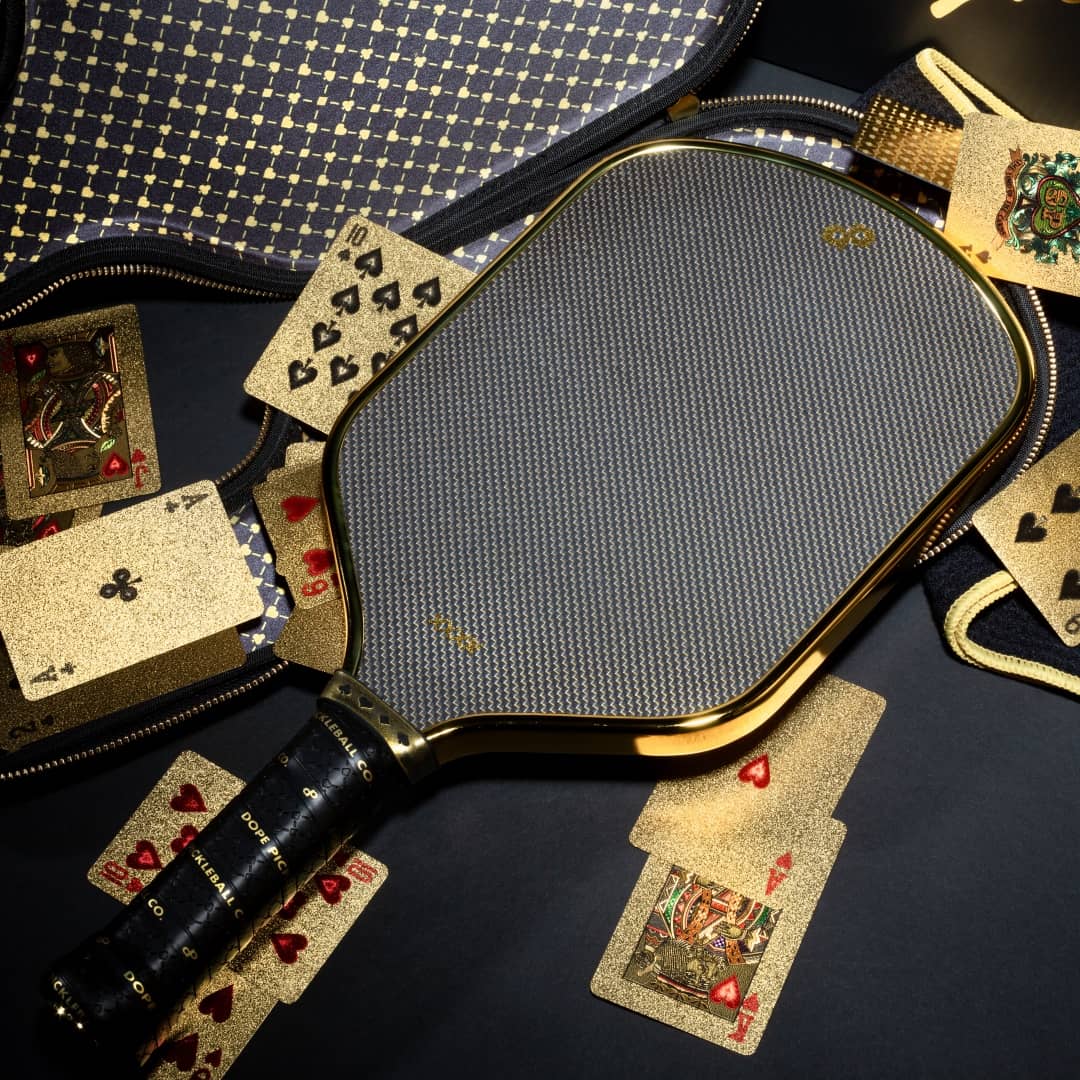
If pickleball is the more accessible option near you, Dope Pickleball offers a chrome-gold and glitter-forward recreational setup. Use the live product pages for current price, options, and availability.

High Roller Paddle

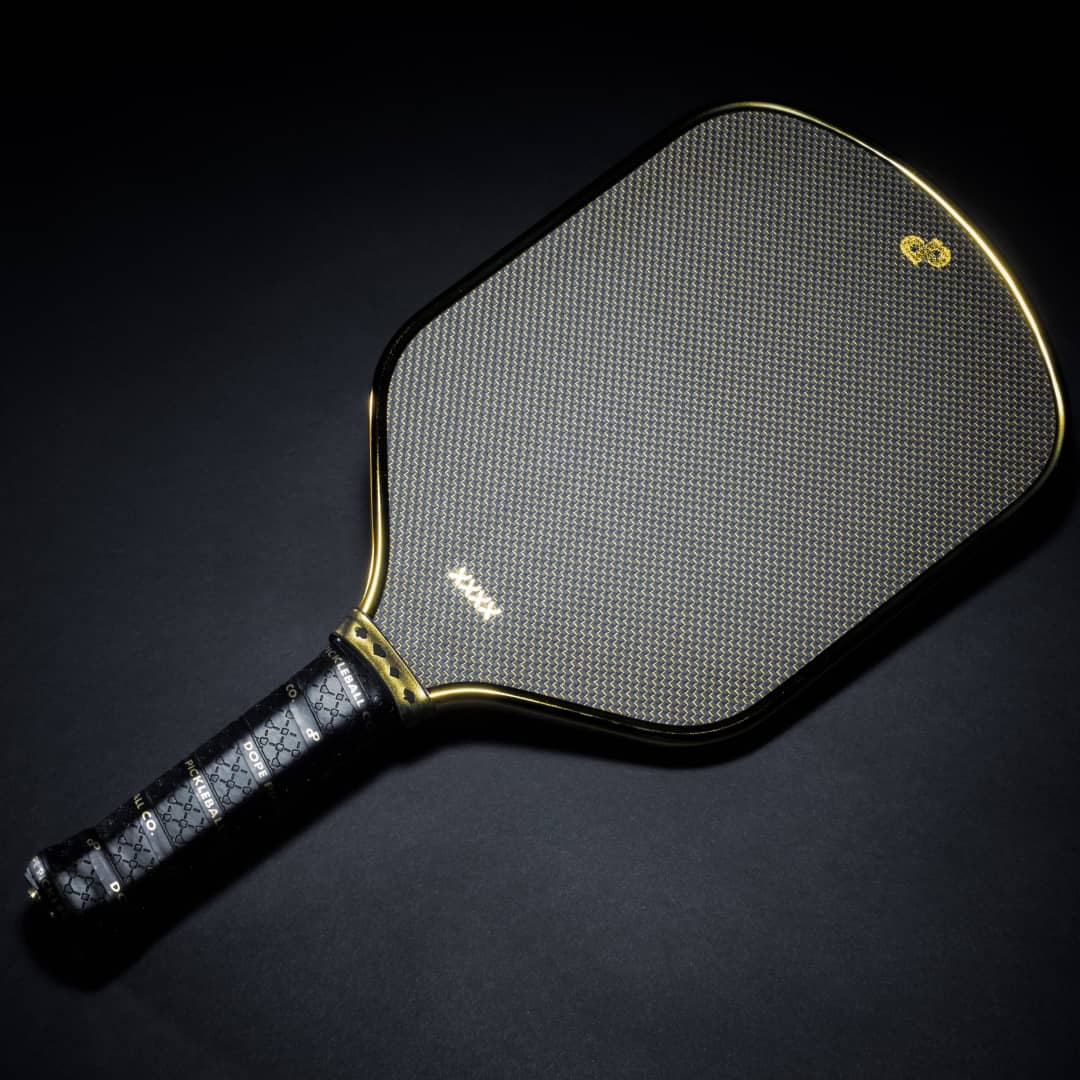
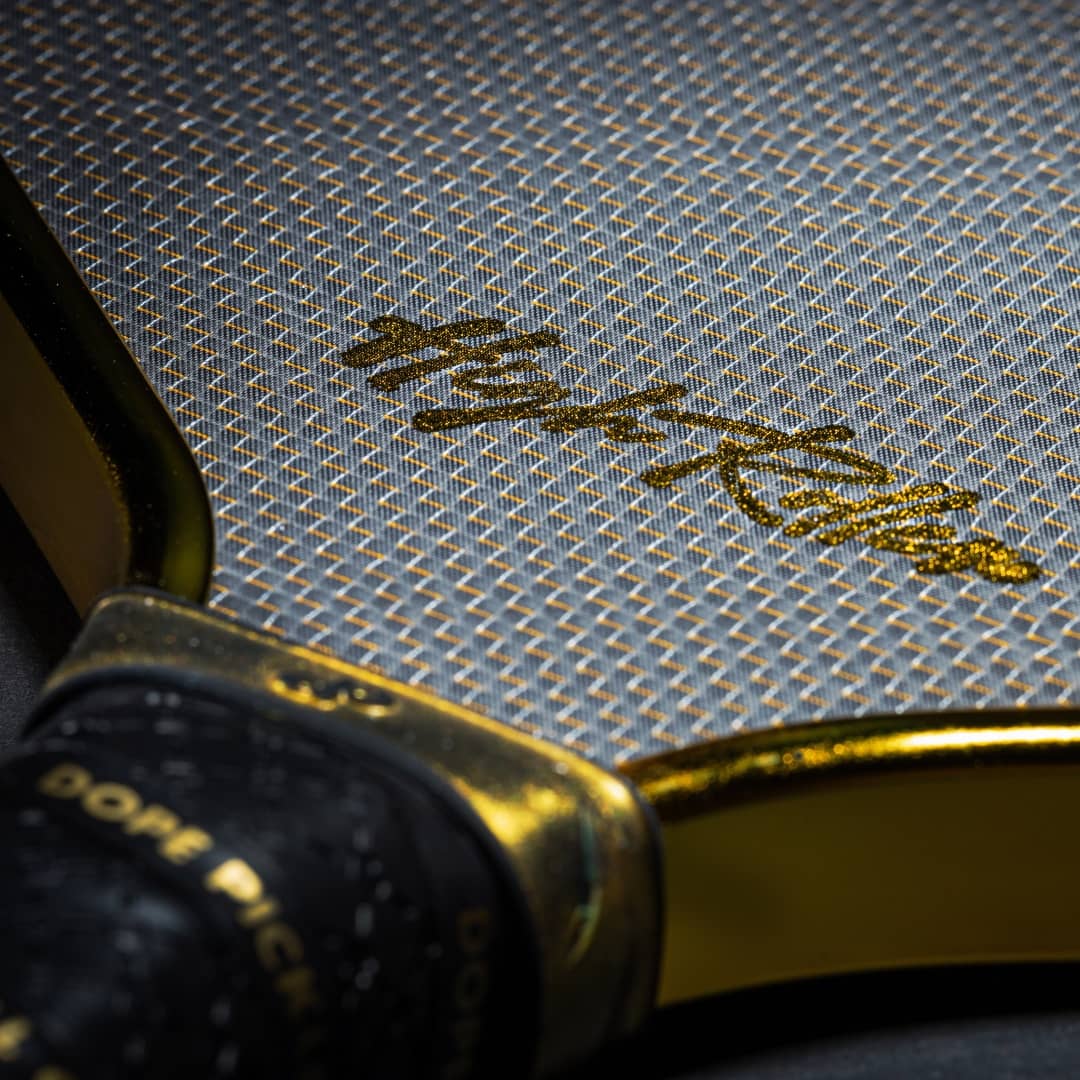
The High Roller Pickleball Paddle is Dope's original chrome-gold, style-first paddle. Its product page states that it is not USA Pickleball approved, so treat it as a recreational identity piece rather than sanctioned-tournament equipment.

Pink and Yellow Glitter Pickleballs

The Pink & Yellow Glitter-Infused Pickleball Ball Bundle adds the brand's GlitterTech look to casual outdoor play. It is pickleball equipment, not a padel-ball substitute. Verify event requirements before organized competition.

Frequently Asked Questions

Is padel the same as pickleball?

No. Padel uses an enclosed 10-by-20-meter court, wall rebounds, a perforated racket with wrist cord, and a pressurized ball. Pickleball uses an open 20-by-44-foot court, solid paddle, and plastic ball with holes.

Can you play padel on a pickleball court?

No, not as regulation padel. Padel requires a larger enclosed court with walls or glass and fencing designed for play.

Which is easier to learn?

Pickleball is often easier to access and start. Padel adds wall-rebound decisions but can feel intuitive with coaching and a suitable court.

Do pickleball and padel use the same ball?

No. Pickleball uses a hollow plastic ball with holes. Padel uses a pressurized rubber ball made to padel specifications.

Do both sports use an underhand serve?

Both use controlled below-waist or underhand-style serving concepts, but the procedures differ. Padel requires a bounce before contact and allows a second serve; pickleball has its own volley-serve and drop-serve rules.

The Bottom Line

Pickleball is an open-court paddle sport built around a plastic ball, two required bounces, the kitchen, and compact positioning. Padel is an enclosed-court racket sport built around wall rebounds, a pressurized ball, and tennis-style games and sets.

The best first choice may be the court you can actually book. Once access is equal, choose between kitchen strategy and wall strategy—or learn both without pretending they are the same game.

For the beginner-focused decision, read Pickleball vs. Padel for Beginners: Which Is Easier to Start?

Sources Checked

Powered by Omni Themes