

To choose your first pickleball paddle, start with where you plan to play, then compare approval status, comfort, weight and balance, shape, handle, face feel, durability, and budget. A beginner does not need the most expensive paddle or the loudest performance promise. You need one you can swing comfortably, control consistently, and legally use in the sessions you intend to enter.

This guide gives you a practical buying sequence, including the honest place for DOPE’s style-first High Roller paddle.

1. Decide Where You Want to Play

Approval status should be the first filter because it can determine whether you may use the paddle at all. If you expect to enter a USA Pickleball-sanctioned tournament, choose an exact model that appears on the live USA Pickleball Approved Paddle List. Leagues and non-sanctioned events may adopt the same rule, so check their terms.

If your plan is social open play, backyard games, or another recreational setting, ask the host whether non-approved paddles are allowed. A beginner who is unsure about future competition usually gets more flexibility from an approved model. A player who specifically wants an art-forward recreational paddle may reasonably choose differently—with the limitation understood before purchase.

Approval is not a quality ranking

An approved listing addresses equipment compliance and competition eligibility. It does not tell you whether the paddle feels comfortable, suits your swing, lasts longer, or matches your taste. Treat approval as a gate, then evaluate the rest.

2. Check Comfort, Static Weight, and Balance

The number on a scale is only part of how a paddle feels. Two paddles with similar static weight can swing differently if one carries more mass toward the head. Beginners should consider three sensations:

  • Maneuverability: Can you move the paddle into position quickly at the kitchen line?
  • Stability: Does the paddle twist excessively when contact misses the center?
  • Fatigue: Can you swing and hold the paddle ready through an entire session without discomfort?

Do not buy solely from a “light,” “midweight,” or “power” label. Brands do not always use those terms identically. If possible, hit volleys, serves, resets, and backhands with the actual model. A short kitchen warm-up cannot reveal how your arm feels after ninety minutes.

3. Choose a Shape and Handle That Match Your Game

Standard or widebody shapes

A broader face usually gives beginners a visually generous hitting area and can feel forgiving on off-center contact. It is a sensible default when you are still learning consistent spacing.

Elongated shapes

An elongated paddle can offer more reach and may appeal to players coming from tennis, but the different balance and narrower face are not automatically easier. Test it rather than assuming extra length means a better first paddle.

Handle length

A longer handle provides room for a two-handed backhand and can change leverage. A shorter handle leaves more of the paddle’s permitted dimensions in the face. Your hands should fit without crowding the butt cap or reaching onto the paddle face.

Before buying, shadow-swing a forehand, backhand, serve, and quick volley exchange. Make sure your wrist and second hand—if you use one—have space to move naturally.

4. Understand Face and Core Language Without Buying the Hype

Product pages often emphasize carbon fiber, fiberglass, graphite, polymer honeycomb, foam, thickness, thermoforming, texture, and proprietary names. These details can influence feel, but no single material guarantees control or power for every player.

  • Face material and finish affect contact sensation and can contribute to how the ball leaves the paddle.
  • Core construction and thickness influence feel, sound, stability, and response.
  • Shape and mass distribution can matter as much as the headline material.
  • Manufacturing consistency determines whether the paddle you receive matches the experience reviewers describe.

For a first paddle, prioritize predictable contact over a promise of maximum spin or power. Read the exact specifications, warranty, and return policy. If a seller does not provide enough information to identify the model or intended use, keep shopping.

5. Get the Grip Size and Feel Right

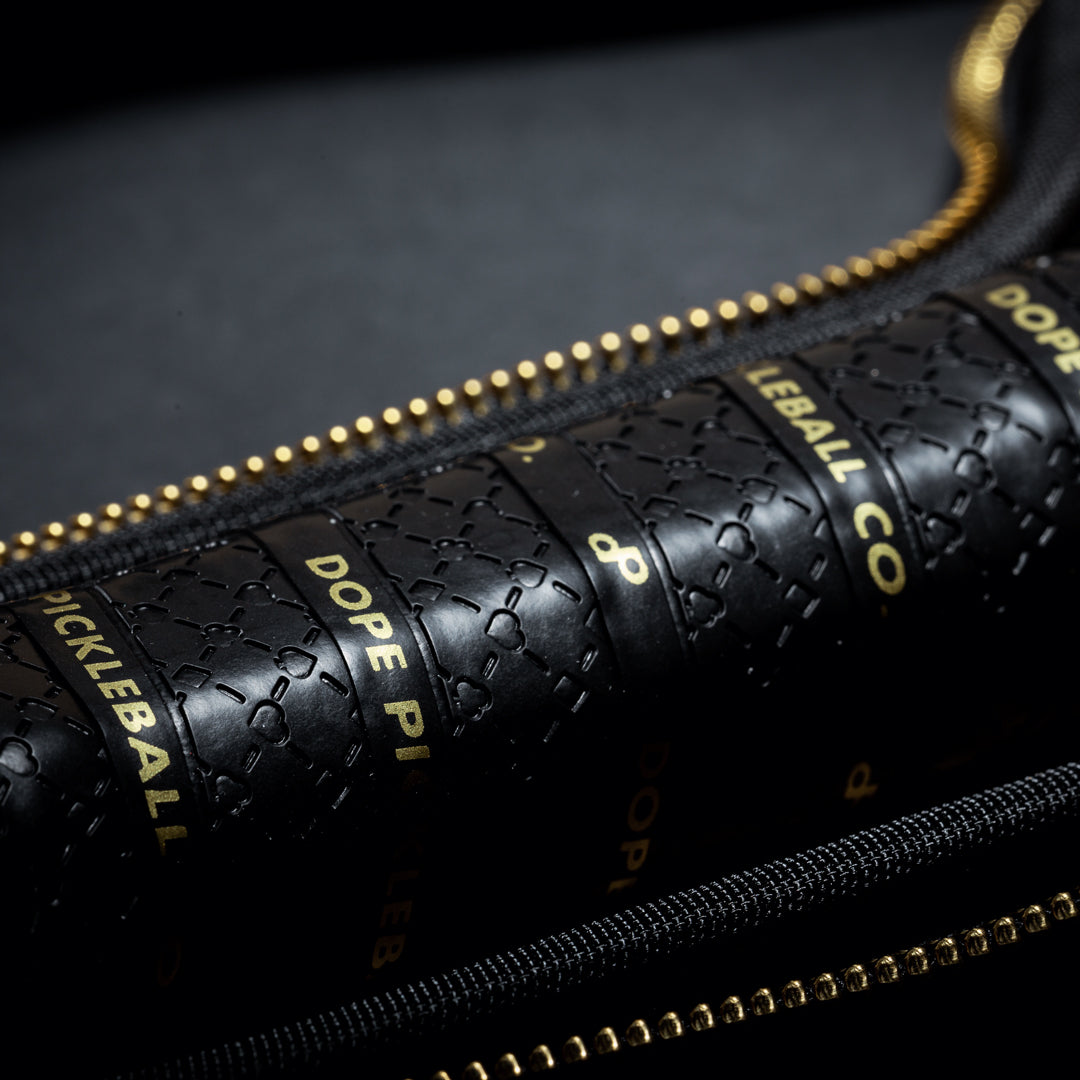
A grip that feels too large can make it harder to change grips and use the wrist naturally. A grip that feels too small may encourage squeezing and can move in the hand. Hand-measurement charts are only a starting point; actual comfort is the better test.

Hold the paddle with a relaxed handshake grip. You should be able to maintain control without crushing the handle. Check the grip when dry and, if possible, after your hand warms up. An overgrip can add circumference and change tack, but it cannot make an oversized base handle smaller.

Do not ignore the edge and butt cap

Beginners scrape paddles on low balls. An edge guard can protect the perimeter, while the butt cap should feel secure in the heel of the hand. Inspect seams, grip alignment, and edge finish before removing tags or discarding packaging.

6. Test Before You Commit

A demo session is more valuable than a long specification debate. Use the paddle for the shots beginners actually need:

  1. Ten controlled serves to both boxes.
  2. Ten deep returns.
  3. Twenty kitchen volleys.
  4. Twenty soft dinks and resets.
  5. Several backhands, including a two-hander if that is part of your game.
  6. A full game long enough to notice fatigue and grip movement.

Track what you feel rather than whether every ball lands in. A beginner’s technique will vary. Ask whether the paddle helps you find a repeatable contact point and whether misses feel understandable.

Questions to ask before checkout

  • Is this exact model approved for the play I intend?
  • What is the actual weight range, and can I select a unit?
  • What are the handle length and grip circumference?
  • What warranty covers defects, delamination, or edge separation?
  • Can I return a paddle after a brief demo?
  • Does the brand publish current, model-specific information?

Avoid These First-Paddle Mistakes

  • Buying for an imaginary future pro game. Choose for the level and environment you will actually play now.
  • Ignoring approval until tournament registration. Check first if organized competition is even a possibility.
  • Assuming expensive means comfortable. Fit is personal.
  • Chasing maximum power. Beginners already lose many points from depth and control errors.
  • Copying a friend’s setup exactly. Hand size, strength, technique, and preferred shape differ.
  • Buying from a stale or vague listing. Match the exact model, current media, current policy, and current specifications.

The Honest DOPE Choice

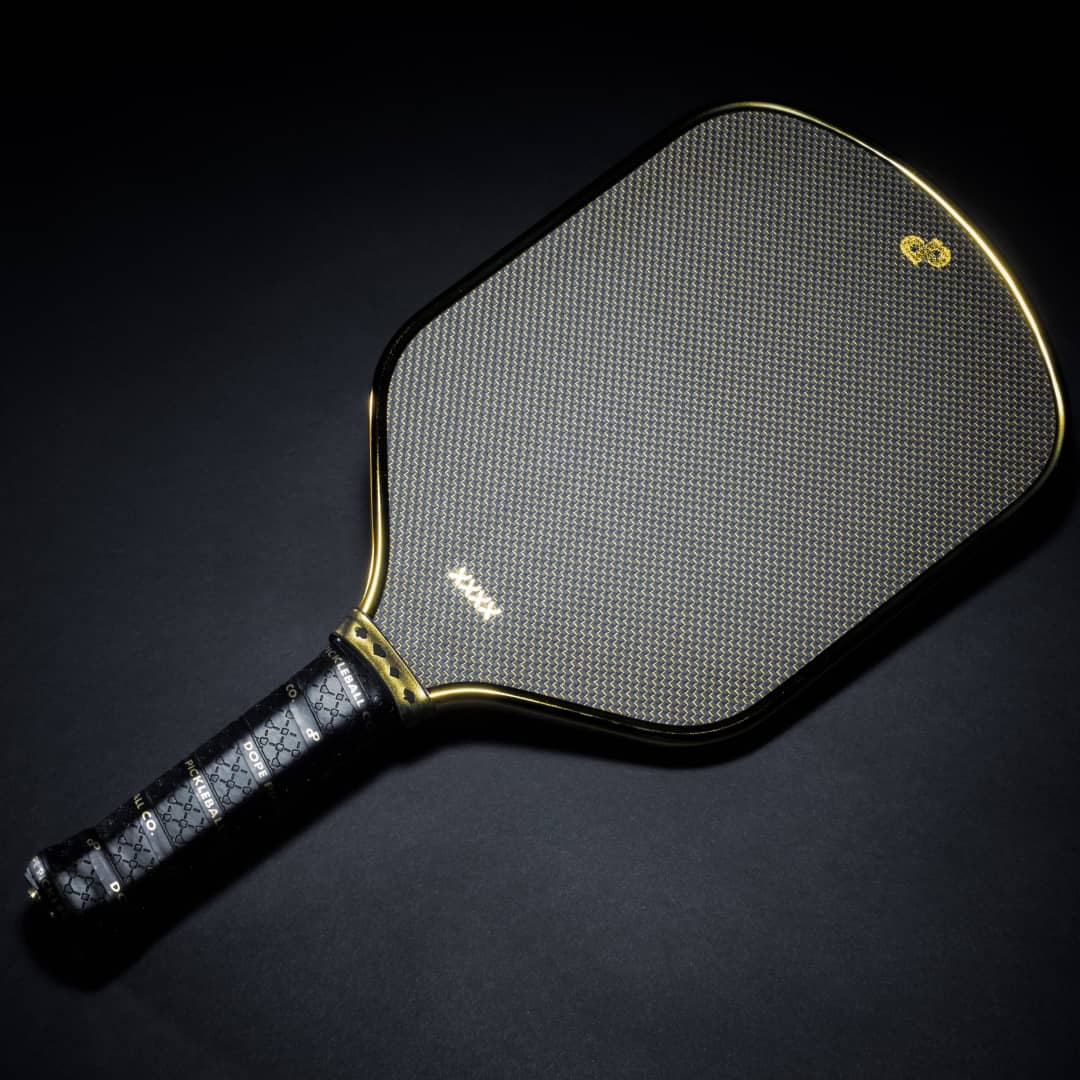
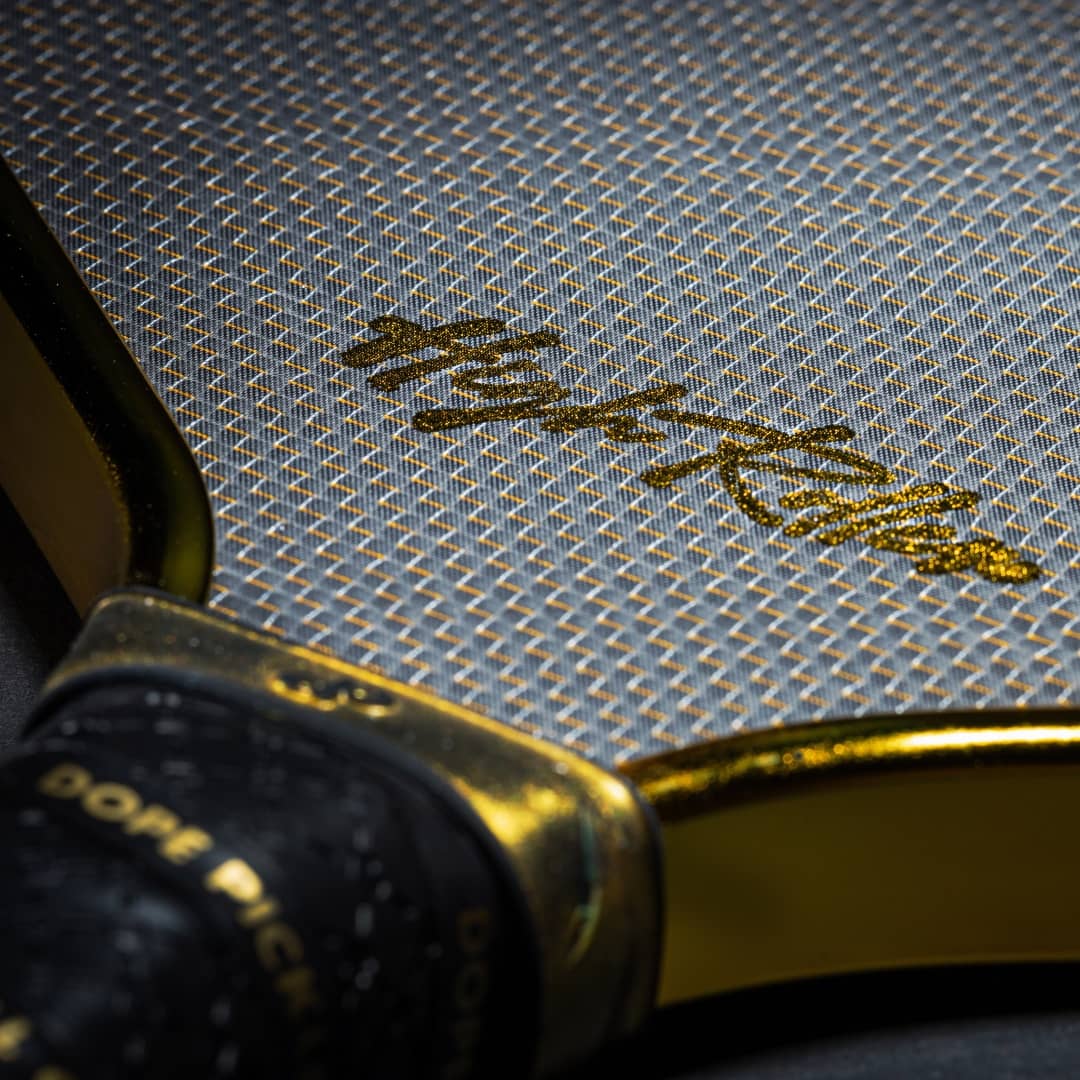
The High Roller Chrome Gold Pickleball Paddle is for the beginner or established player who wants DOPE’s signature gold look for recreational and unsanctioned play where the paddle is allowed. Its current product page states that it is not USA Pickleball approved. Do not select it as your only paddle if sanctioned eligibility is required.

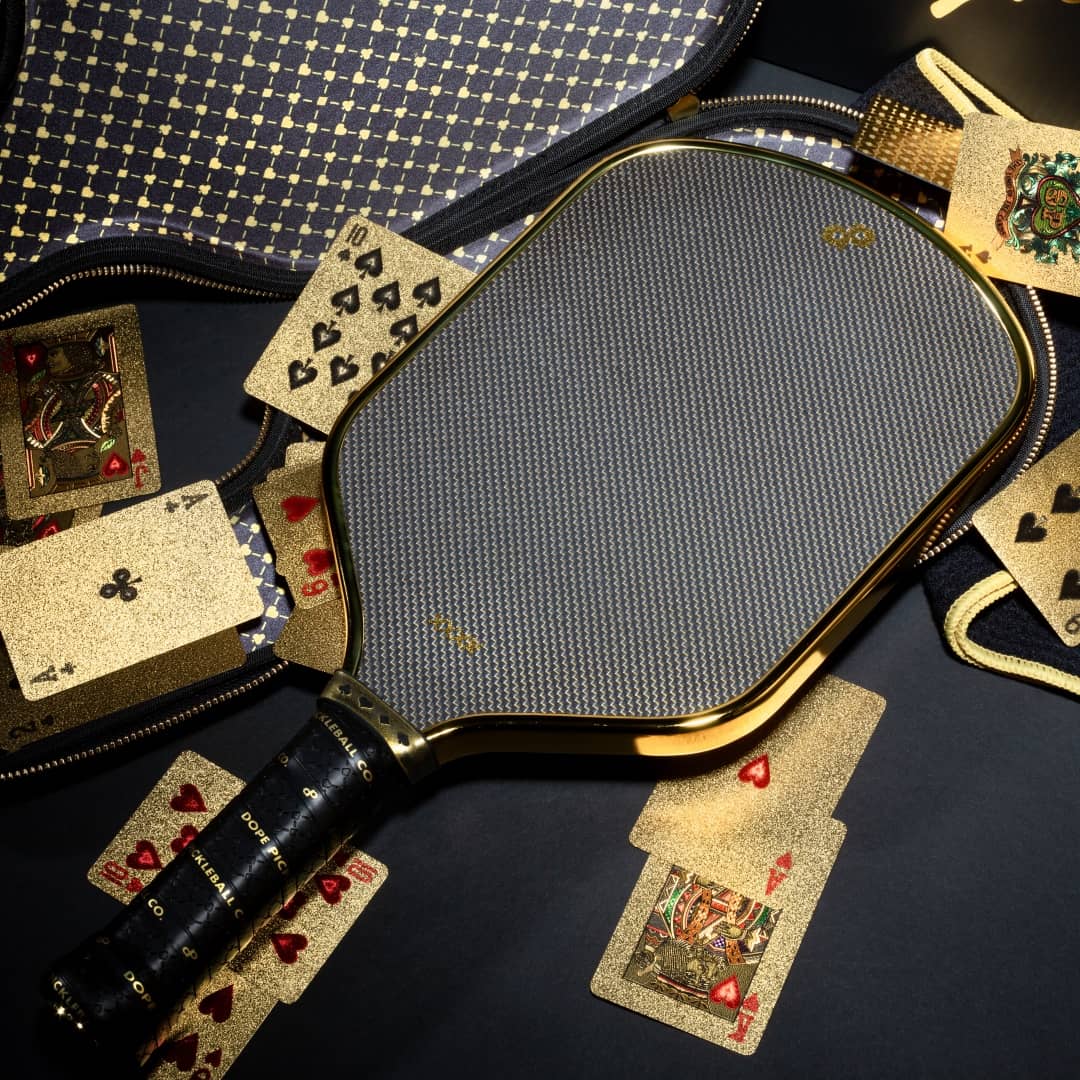
If competition is your goal, choose a currently approved model for tournament use. If social play and visual identity are the goal, the High Roller can anchor a coordinated setup with the High Roller Paddle Travel Case and Gold Glitter-Infused Ball 4-Pack. The High Roller Club Bundle brings the collection together in one purchase.

First-Paddle Decision Table

Your priority Start with Watch for
Sanctioned competition Current approved-list status Exact model and compliant condition
Comfort and easy handling Demo weight, balance, and grip Fatigue or squeezing after a full session
Two-handed backhand Usable handle length Crowded hands or head-heavy feel
Forgiving contact Comfortable face shape and stability Twisting on typical off-center hits
Style-first recreational setup Design plus clear use limitations Venue and event restrictions

Frequently Asked Questions

What should a beginner look for in a pickleball paddle?

Start with approval needs, then test comfort, weight and balance, face shape, handle length, grip, predictable feel, warranty, and budget.

Should a beginner use a lightweight paddle?

Not automatically. A lighter paddle may move quickly, but balance and stability also matter. Demo the actual paddle for a full session when possible.

Is carbon fiber always better for beginners?

No material is automatically best for every beginner. Compare the complete paddle—face, core, shape, balance, consistency, and feel.

Does a first paddle need to be USA Pickleball approved?

It must be approved for a USA Pickleball-sanctioned tournament and may be required by other organizers. Recreational groups and venues set their own policies.

Is the DOPE High Roller a tournament paddle?

No. Its current product page says it is not USA Pickleball approved. It is positioned for permitted recreational and unsanctioned play.

Official Sources

Powered by Omni Themes