


Pickleball began as a family solution on Bainbridge Island in the summer of 1965. Joel Pritchard, Bill Bell, and Barney McCallum did not begin with a polished product or a formal governing body. They began with an existing badminton court, incomplete equipment, a perforated ball, and a question: what can everyone play right now?
The surprising part is not only that the game survived. It is that the improvised choices—smaller court, solid paddles, a bouncing plastic ball, and a net game built for mixed players—contained the structure of a global sport.
The Afternoon Pickleball Began
The setting was the Pritchard family’s summer property on Bainbridge Island, Washington. Joel Pritchard and Bill Bell returned from golf to a family looking for an activity. A badminton court was on the property, but the available equipment did not support a normal badminton game.
They adapted. Accounts from the Bainbridge History Museum, USA Pickleball, and the Pritchard family place the creation in 1965 and credit Joel Pritchard, Bill Bell, and Barney McCallum.
The story is sometimes reduced to “bored kids.” The real design problem was more interesting: create a game that could hold the attention of different ages and abilities using the place and objects already available.
The First Equipment Was a Working Prototype
The first setup pulled from several sources:
- the dimensions of an existing badminton court;
- a perforated plastic ball;
- small table-tennis-style paddles;
- a badminton net that was later adjusted;
- eventually, larger wooden paddles made for the game.
Each choice affected the others. The plastic ball did not behave like a shuttlecock or tennis ball. The paddles had no strings. The court was compact. Players could test an idea immediately and change it after the next rally.
That process is why pickleball should not be described as “tennis but smaller.” The founders were not shrinking a finished sport. They were finding a new relationship among court, ball, paddle, net, and player.
How Play Shaped the Rules
Modern pickleball preserves several constraints that make the game recognizable:
The two-bounce rule
The receiver must let the serve bounce, and the serving side must let the return bounce. This prevents the serving team from taking the net immediately and creates a positional transition.
The non-volley zone
The 7-foot kitchen keeps players from standing directly over the net and volleying every ball downward. Players can enter the zone, but they cannot volley while touching it or let volley momentum carry them into it.
The low net and compact court
A standard court is 20 by 44 feet. The net is 36 inches at the sidelines and 34 inches at center. Those dimensions support both soft crosscourt dinks and quick attacks.
The solid paddle and perforated ball
The paddle-ball contact feels and sounds different from strings on a tennis ball. Wind, temperature, ball condition, face angle, and compact technique all shape the rally.
How “Pickle Ball” Entered the Story
Joan Pritchard is credited with naming the game. Her explanation compared its mixed ingredients with a pickle boat in rowing—a crew assembled from available rowers from other boats.
The family dog Pickles became a famous alternate explanation. USA Pickleball’s historical report places the dog’s birth in 1968, after the game and name existed, and says Pickles was named after the sport.
The dog version persists because it is charming. The pickle-boat version persists because the timeline and family evidence support it. Our name-origin evidence guide compares both directly.
From a Family Property to a Community Sport
A game becomes a sport when other people can reproduce it. The founders and early players refined equipment, shared the activity, documented rules, and created organizational structure. Pickle Ball Inc. was incorporated in 1968. USA Pickleball published its first official rulebook in 1984.
Those steps transformed memory into repeatability. A player elsewhere could build a court, acquire equipment, read the same rules, and recognize the game. Clubs, recreation departments, schools, leagues, and tournaments could then organize around a common language.
The SFIA’s 2026 report announcement says core U.S. participants grew from 1.4 million in 2020 to 7.5 million in 2025. The scale is modern; the ability to bring different players together is part of the original brief.
What Modern Pickleball Kept From 1965
| 1965 design problem | Modern expression |
|---|---|
| Use an available compact court | 20-by-44-foot standard for singles and doubles |
| Create playable family rallies | Two-bounce rule and multiple skill/age formats |
| Prevent net domination | 7-foot non-volley zone on each end |
| Build around a plastic ball | Formal ball specifications and approved equipment lists |
| Share the game with others | Published rules, clubs, leagues, and sanctioned events |
From Improvised Gear to Deliberate Design
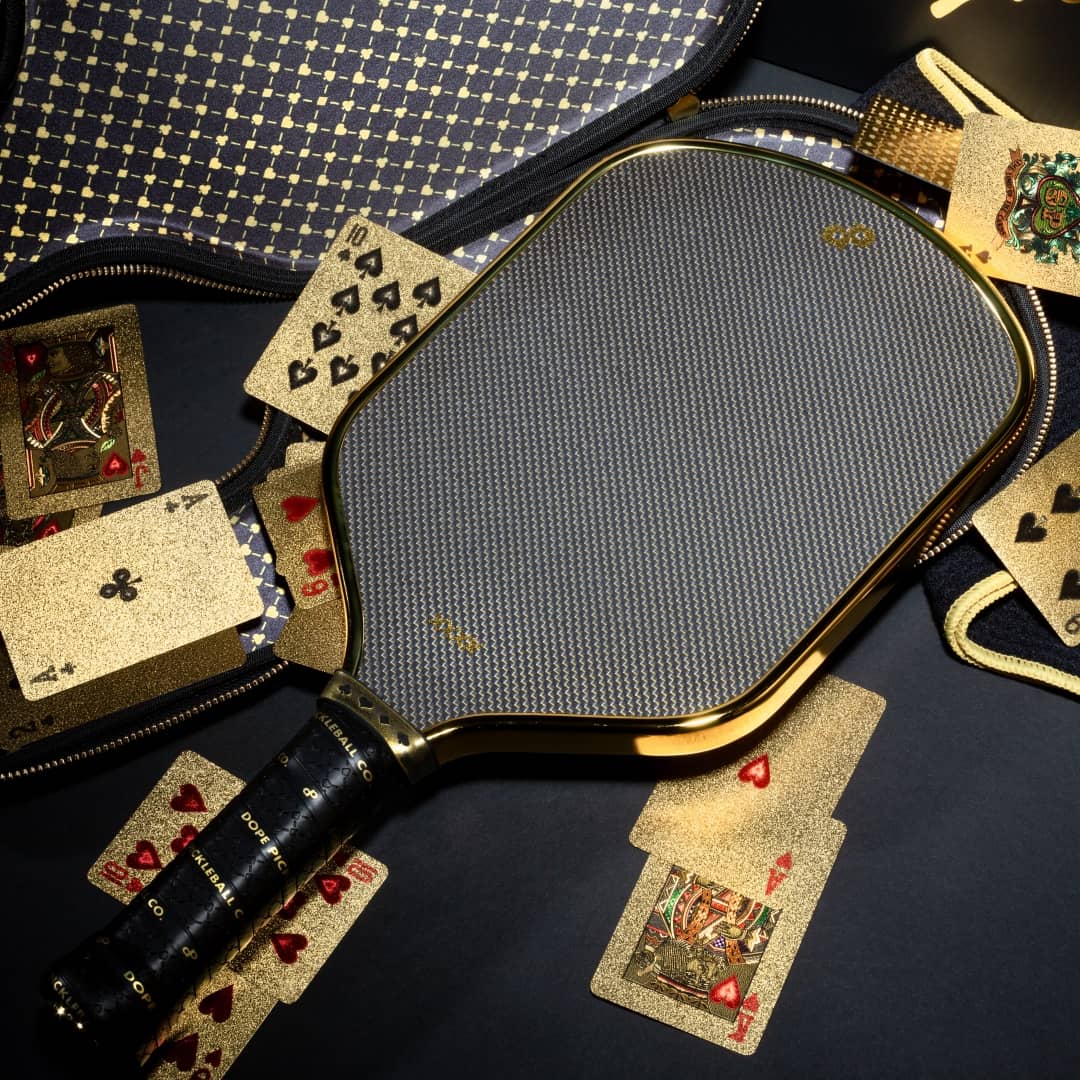
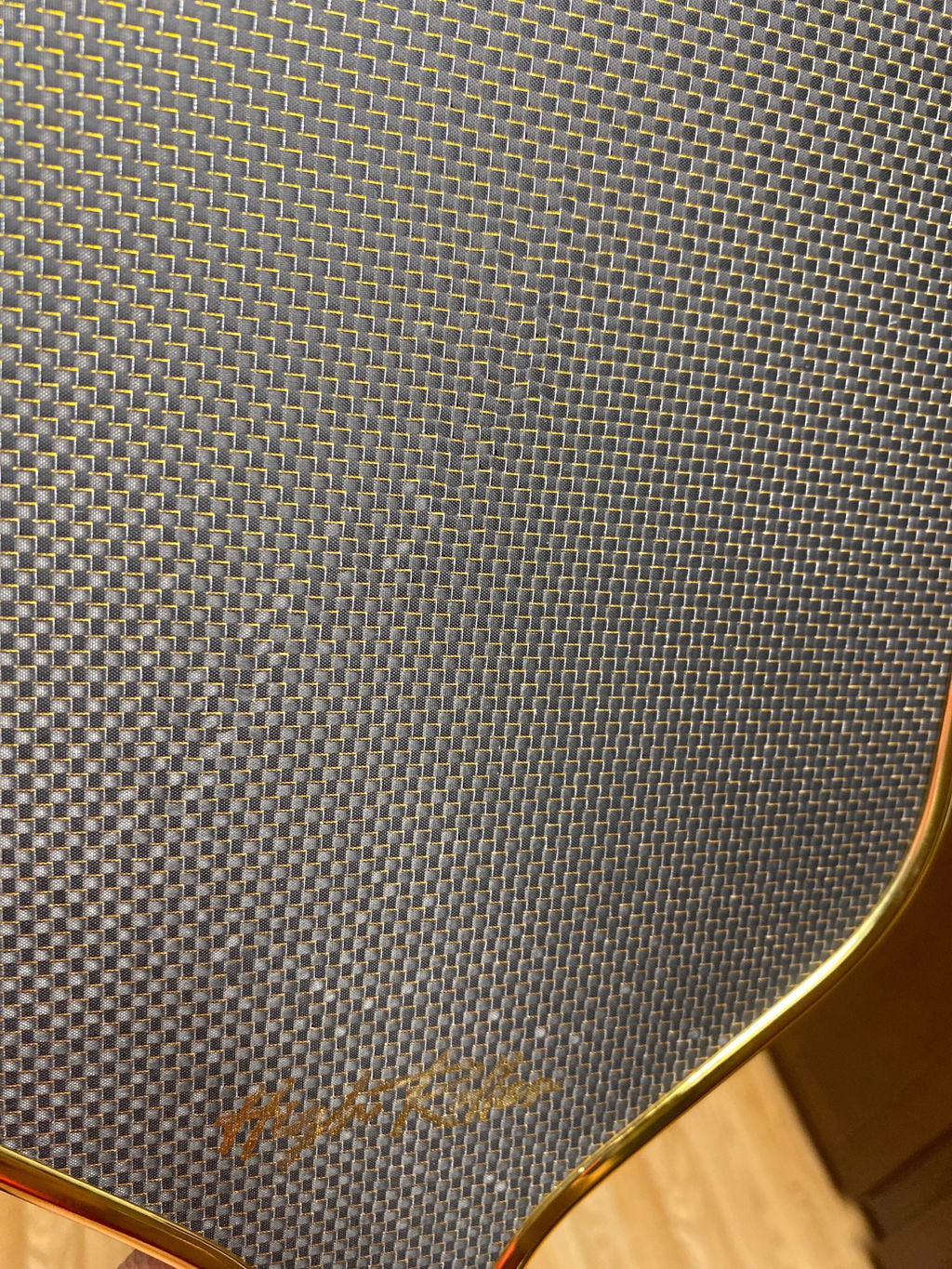
The original equipment solved a problem. Modern equipment can solve a problem and carry a point of view. DOPE’s High Roller Chrome Gold Paddle is built around a recognizable visual treatment and a coordinated collection. Its current product page states that it is not USA Pickleball approved, so it is for recreational or unsanctioned play where permitted—not sanctioned competition.
The High Roller Club Bundle places the paddle beside its case, ball, apparel, sunglasses, socks, and tumbler so the gear reads as one system rather than unrelated add-ons.
The sunglasses listing describes polarized lenses and UV protection, but it does not state an ASTM F803 or ANSI impact rating, lens material, or numerical UV category. They should not be presented as certified protective eyewear.
Complete a social-play setup with the High Roller Gold Glitter-Infused Ball or protect the paddle in its matching travel case. Check venue and event equipment rules before play.
What Today’s Pickleball Organizers Can Learn From the First Game
The surprising part of the 1965 pickleball story is not merely that the equipment was improvised. It is that the group kept adjusting the experience until people with different abilities could stay involved. Modern hosts can use the same principle without changing official rules. Choose a session format that fits the players, explain rotation before the first game, group beginners with patient partners, and reserve competitive courts for players seeking higher intensity. Accessibility comes from thoughtful organization as much as from court size.
Equipment choices should be just as deliberate. A recreational host can select balls for visibility against the court and background, ask every player to wear surface-appropriate shoes, and state any paddle restrictions before arrival. A tournament director has a different responsibility: publish the governing rules, equipment requirements, check-in procedure, and rating or division criteria. In either setting, clarity prevents a casual assumption from becoming a courtside argument.
The origin story also offers a strong way to introduce the sport. Teach the serve, the two-bounce rule, the kitchen, and scoring in that order, then begin with cooperative rallies. Players understand faster when each rule is tied to the kind of rally it creates. Pickleball grew from a family experiment because the experience invited another point; a well-run modern session should preserve that same desire to keep playing.
Frequently Asked Questions
Where was pickleball invented?
At the Pritchard family’s summer property on Bainbridge Island, Washington.
When was pickleball invented?
In the summer of 1965.
Who invented pickleball?
Joel Pritchard, Bill Bell, and Barney McCallum are credited as the founders, with their families central to its development.
Why was pickleball invented?
It began as a family activity that could be played with the available court and improvised equipment.
Why is it called pickleball?
The founding-family account says Joan Pritchard compared the mixed game with a pickle boat made up of rowers from other crews.
Share:
Is Pickleball Easier Than Tennis for Beginners?
Can You Use a Non-Approved Pickleball Paddle?