

The fastest way for beginners to win more pickleball doubles points is to improve positioning before adding harder shots. Return deep and move forward, keep both partners connected, respect the two-bounce rule, aim at high-margin targets, and communicate before confusion becomes an error. Those five fundamentals make an ordinary pair much harder to attack.

This guide turns each principle into a simple decision you can use in your next game. It follows the current USA Pickleball rules and is designed for new teams—not advanced players memorizing complicated formations.

Start With the Rule That Shapes Every Doubles Point

The two-bounce rule requires the return of serve to bounce on the receiving side and then requires the serving team to let that return bounce before hitting its next shot. This creates an intentional positional difference:

  • The receiving team can return and move toward the non-volley-zone line immediately.
  • The serving team must stay back long enough to play the bouncing return.

That is why good beginner strategy is not simply “run to the net.” The receiving team should usually advance after a deep return. The serving team should earn its way forward after the third shot instead of charging into a ball it is required to let bounce.

1. Win the Kitchen-Line Position

In neutral doubles rallies, the non-volley-zone line is usually the strongest position because it lets you contact more balls in front, reduce your opponent’s reaction time, and create downward angles when a ball sits high. The objective is to reach that line under control with your partner.

When your team returns serve

Hit a deep, controlled return and move forward. Your partner should already be near the kitchen line. The returner’s job is to join them before the opponents can exploit the gap. A deep return buys more travel time because the serving team must play its next ball farther from the net.

When your team serves

Both players should begin behind the baseline so the return can bounce without forcing a retreat. After the bounce, use a controlled third shot—a drop, drive, or another neutral ball—and advance only as the quality of that shot permits. If the opponents can attack down at your feet, stop and defend rather than sprint through contact.

Beginner cue

Return and go; serve and stay. It is not the entire strategy, but it prevents the two most common starting-position errors.

2. Move Together and Close the Middle

Doubles partners should move like two players connected by a short rope. If one player slides left, the other shifts left enough to preserve useful spacing. If one moves forward, the other should not remain stranded at the baseline without a deliberate reason.

A large gap between partners creates an obvious target. So does a staggered formation where one player is at the kitchen line and the other is several steps behind. The opponent does not need a spectacular shot; a controlled ball through the opening is enough.

Who takes the middle ball?

There is no phrase that solves every middle ball. Many teams begin with “forehand takes the middle,” but handedness, court position, pace, and who can attack in front all matter. Agree on a default, then use a loud, early call:

  • “Mine” when you are taking it.
  • “Yours” when your partner has the better play.
  • “Bounce” when the ball is likely to land out and neither player should swing.

A useful spacing check is whether both partners could reach toward the middle without colliding. Too far apart leaves a lane; too close lets one shot jam both players.

3. Choose High-Margin Targets

Beginners often lose points while trying to hit winners that were not available. Doubles rewards patience because two opponents cover less court when they are positioned well. Instead of painting sidelines, make the other team hit one more ball from an uncomfortable place.

Three beginner-friendly targets

  1. Deep through the middle on returns. The middle gives more court margin and can create hesitation.
  2. At the feet of an advancing player. A low contact near the shoes is harder to attack than a ball at chest height.
  3. Into the kitchen when opponents own the line. A soft ball that lands low can neutralize their position and create time to move forward.

Crosscourt dinks also provide more distance over the net and can pull an opponent away from the center. Use the sideline as a target only when your balance and contact point support it—not because the line looks exciting.

4. Respect the Transition Zone

The space between the baseline and kitchen line is often called the transition zone. Players call it “no-man’s-land” because staying there without a plan exposes the feet. But every serving team must travel through it. The skill is learning to move, stop, defend, and move again.

Use the split step

As the opponent is about to contact the ball, stop your forward movement with a balanced split step. A moving player has a harder time controlling a fast ball at the feet. A balanced player can block, reset, or let an out ball travel.

Advance behind the ball, not ahead of it

A good drop or low reset earns forward steps. A high third shot does not. If your ball gives the opponent an overhead attack, stay balanced and prepare to defend. If the next reset lands safely in the kitchen, move again. Reaching the line in two or three controlled stages is better than arriving once with no balance.

Keep the paddle ready

Hold the paddle in front of the body in a neutral position. The transition zone is not the place for a long backswing. Compact blocks and soft hands give you more control against pace.

5. Communicate Before, During, and After the Rally

Communication is a strategy, not a personality trait. Quiet partners can use the same short calls as loud ones. What matters is consistency.

Before the serve

  • Confirm the score and correct server.
  • Agree who owns likely middle balls.
  • Identify unusual conditions such as sun, wind, or an adjacent court.

During the rally

  • Call “mine,” “yours,” or “bounce” early.
  • Tell your partner when you are staying back after a weak shot.
  • Avoid changing the plan with a late shout during their swing.

Between points

Use one sentence, not a lecture. “Let’s return middle and move together” is actionable. “Stop missing” is not. A steady team makes adjustments without turning every error into a meeting.

Beginner Doubles: What to Do in Each Phase

Phase Serving team Receiving team
Serve and return Serve deep enough to begin neutrally; stay behind baseline for the bounce Return deep; returner advances under control
Third shot Drop, drive, or reset based on the ball; move only behind quality Hold the kitchen line and keep the reply low
Transition Move together, split step, reset when attacked Target feet and gaps without overhitting
Kitchen rally Stay connected, dink with margin, attack high balls Same: protect middle, communicate, stay patient

A 20-Minute Practice Plan for Two Beginners

  1. Five minutes: deep returns. One player serves; the returner aims through the middle and moves to the line.
  2. Five minutes: third-shot movement. The serving pair hits a controlled third shot, takes only the steps it earned, then split steps.
  3. Five minutes: middle communication. Feed balls between partners; every ball must receive an early “mine,” “yours,” or “bounce.”
  4. Five minutes: cooperative kitchen rally. Count consecutive dinks. Attack only a ball clearly above net height.

Use a consistent practice ball and enough extras that a cracked or wind-affected ball does not interrupt every repetition. The Pink & Yellow Glitter Ball Bundle is available in multiple quantities, and the High Roller Gold Ball 4-Pack coordinates with the rest of the collection.

Bring a Team Look Without Confusing It With Strategy

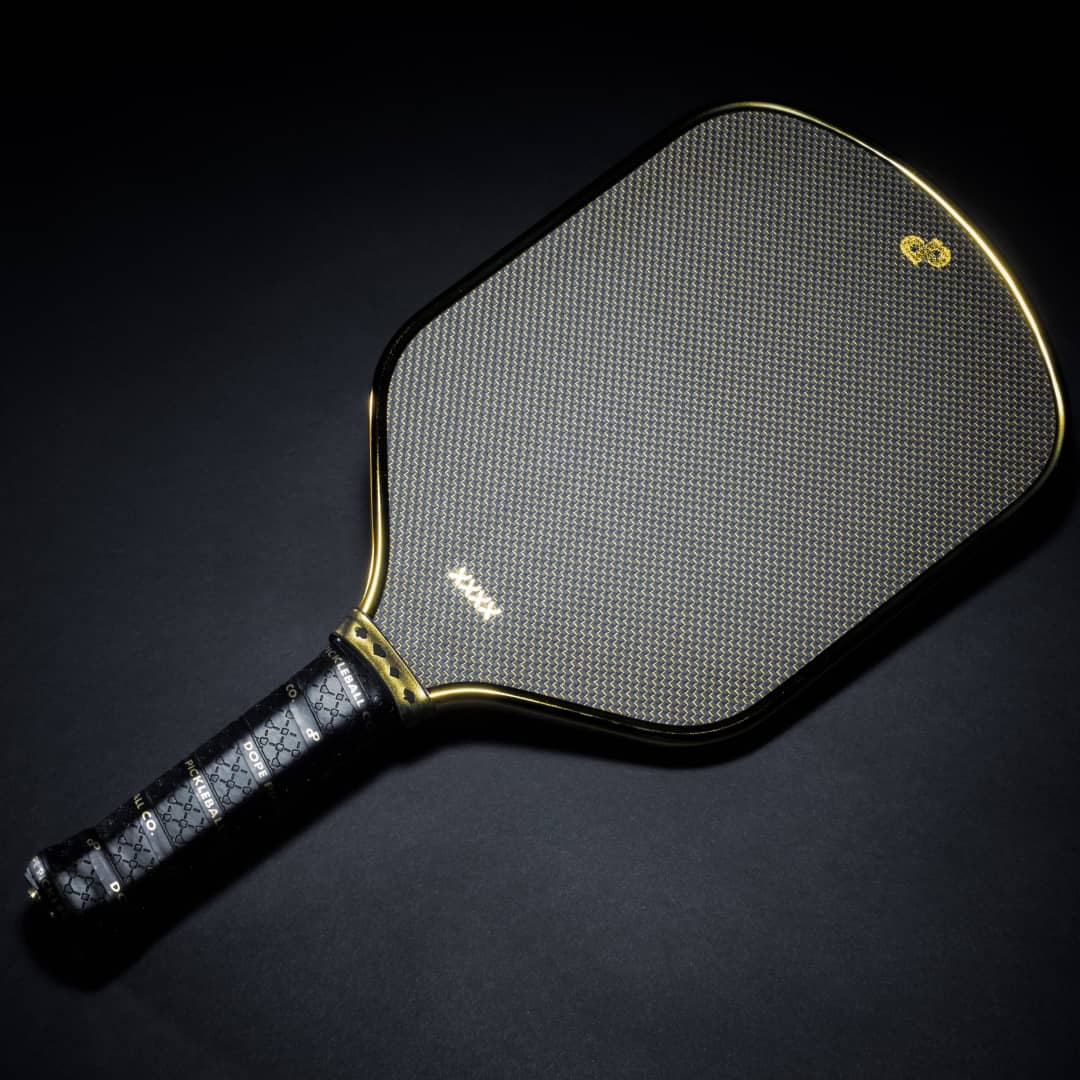
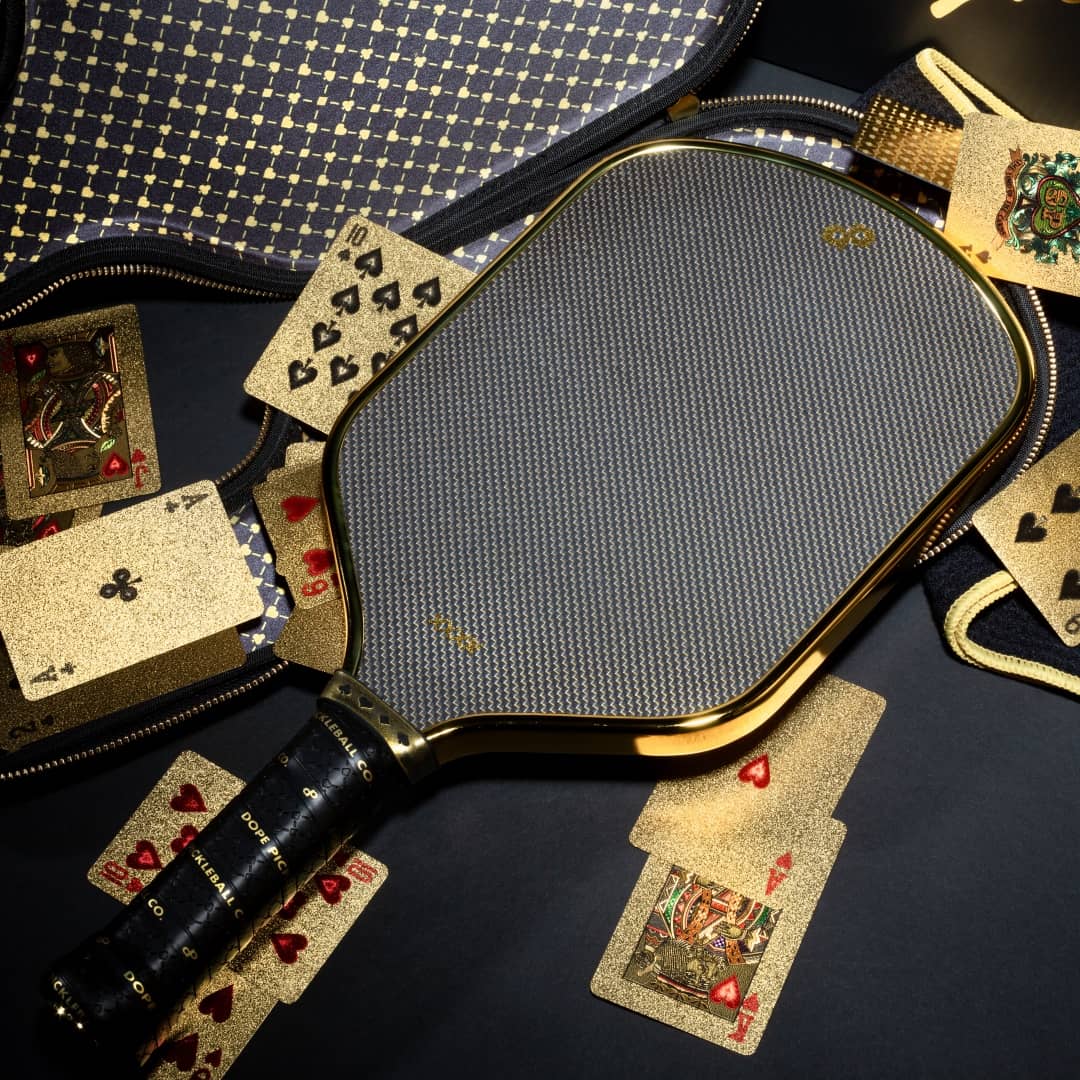
Gear will not replace positioning, communication, or practice. It can make the session feel intentional. The High Roller Club Bundle packages DOPE’s recreational paddle, travel case, ball, apparel, and accessories into one visual system. The High Roller paddle is not USA Pickleball approved, so use it for recreational or unsanctioned play where permitted; choose a listed paddle for sanctioned competition.

For outdoor sessions, the High Roller Black & Gold Performance Hat and High Roller Performance Pickleball Sunglasses carry the same black-and-gold identity beyond the paddle.

The sunglasses listing describes polarized lenses and UV protection. It does not state ASTM F803 or ANSI impact certification, lens material, or a numerical UV category, so treat them as sunglasses—not certified protective eyewear.

Frequently Asked Questions

What is the most important beginner doubles strategy?

Learn where to stand and move with your partner. Positioning gives you more playable balls before advanced shot selection matters.

Should both partners go to the kitchen line?

In a neutral rally, partners generally want to reach the line together. The receiving team can usually advance after the return; the serving team must first let the return bounce and should move behind a controlled third shot.

Who covers the middle in pickleball doubles?

Agree on a default based on forehands, handedness, and court position, then call the ball early. No single phrase replaces communication.

Where should beginners aim?

Use high-margin targets: deep through the middle, low at an advancing opponent’s feet, or softly into the kitchen when the other team owns the line.

Should beginners drive every third shot?

No. A drive can be useful, but the goal is to create a manageable next ball. Mix controlled drives, drops, and resets according to height, balance, and opponent position.

Official Source

Review the current USA Pickleball Official Rulebook for serving sequence, the two-bounce rule, and non-volley-zone requirements.

Powered by Omni Themes