

Former tennis players often enter pickleball with useful movement, contact, tracking, and competitive habits. They also arrive with instincts that can create problems on a smaller court: a long backswing, automatic volley positioning, too much pace, tennis scoring assumptions, and unfamiliar non-volley-zone rules.

Pickleball is not miniature tennis. The court, ball, paddle, serve, scoring, bounce rules, and doubles geometry create a different decision system. The fastest transition comes from keeping transferable skills while deliberately replacing the ones the new game does not reward.

What Transfers From Tennis

Tracking and Contact Awareness

Tennis players are accustomed to reading an opponent’s preparation and organizing the body around a moving ball. That helps on returns, drives, volleys, and overheads. The adjustment is shortening the preparation because the ball travels through less space.

Split-Step and Recovery Habits

A timed split step and a habit of recovering after the shot remain valuable. In pickleball doubles, recovery often means establishing or protecting the non-volley line rather than returning to a tennis baseline pattern.

Directional Intention

Players who already understand crosscourt margin, opponent position, and changing direction have a tactical base. Pickleball asks them to apply that awareness with more patience and a lower tolerance for attacking the wrong ball.

What Must Be Relearned

The Serve Starts the Point, Not the Attack

Pickleball’s serve requirements differ from tennis, and the return must bounce before the serving team can volley because of the two-bounce rule. Read the 2026 USA Pickleball Official Rulebook rather than translating tennis rules from memory.

A reliable deep serve can be valuable, but the smaller service box and underhand or drop-serve rules change the objective. Start with legality and repeatability before adding pace or placement risk.

The Kitchen Changes Volley Position

The seven-foot non-volley zone on each side of the net prevents a player from volleying while touching the zone or violating the momentum provisions. The line is part of the zone. Players may enter it and hit a ball after it bounces; “the kitchen” is not an area players can never occupy.

Tennis players should practice stopping behind the line, identifying whether the ball will bounce, and understanding how momentum after a volley can create a fault.

Doubles Rewards Shared Line Position

Classic one-up/one-back tennis positioning often leaves a large diagonal gap in pickleball. Partners generally want to move forward and backward together, protect the middle through clear responsibility, and avoid creating staggered targets.

Soft Shots Are Structural, Not Defensive Embarrassment

A drop, dink, or reset is not merely a weak reply. It can neutralize an opponent’s attack and give a team time to improve position. A tennis player who treats every reachable ball as a chance to accelerate may donate attackable balls from below net height.

A Four-Session Transition Plan

Session 1: Rules, Serve, Return, and Bounce Sequence

Learn scoring and service order, then play constrained points where the only goals are a legal serve, deep return, and correct two-bounce sequence. Do not chase winners.

Session 2: Kitchen Line and Volleys

Practice split-stepping behind the line, compact blocks, and letting low balls bounce. Add momentum-fault scenarios and partner movement.

Session 3: Drops, Dinks, and Resets

Use targets rather than outcome language. Measure whether the ball lands in a defined safe area and remains difficult to attack. Alternate cooperative and competitive repetitions.

Session 4: Doubles Decisions

Play points with pauses after the third and fifth shots. Identify whether the team should advance, hold, or retreat. Review middle responsibility and communication.

Choose Equipment for the Actual Setting

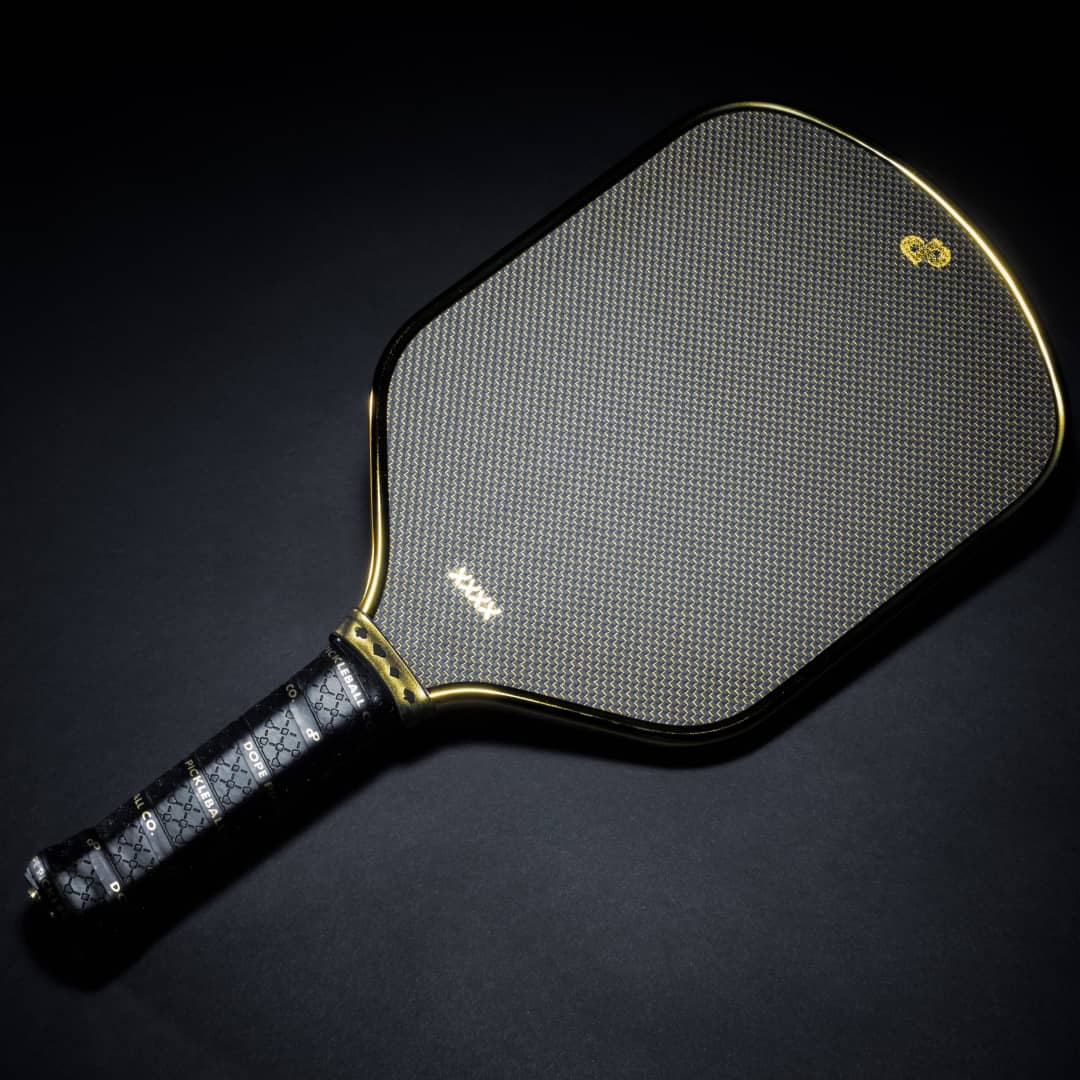
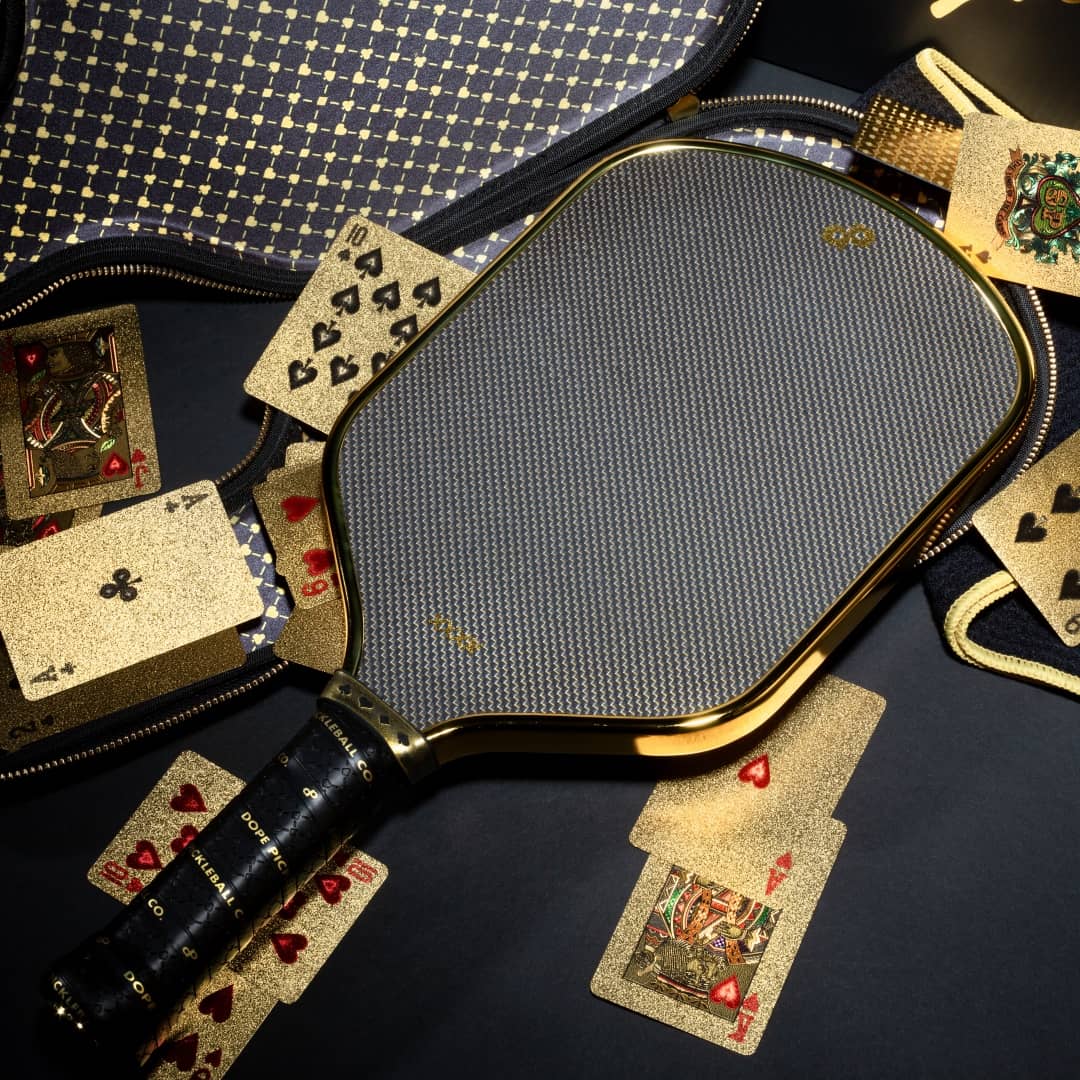
The active High Roller Chrome Gold Paddle is not USA Pickleball approved. It can be a distinctive recreational choice where permitted, but a former tennis player entering a sanctioned event should select an exact model appearing on the current approved-paddle list.

Do not assume a paddle should feel like a tennis racquet or that appearance predicts power, spin, control, balance, or forgiveness. Demo where possible and assess the exact model in the context you will play.

The mixed pink-and-yellow glitter balls can support a recreational visibility comparison against the actual court background. A 40-hole pattern or familiar size does not establish sanctioned approval; verify the exact model and event rules.

Tennis Habits to Audit

  • Large takeback: Shorten preparation when time is compressed.
  • Baseline comfort: Learn when the team can advance together.
  • Automatic pace: Match acceleration to ball height and position.
  • One-up/one-back: Recognize the gaps it creates in pickleball doubles.
  • Tennis scoring: Say the full pickleball score and server number until automatic.
  • Volley assumptions: Learn the kitchen line, momentum, and bounce exceptions exactly.
  • Racquet-language shortcuts: Do not assume tennis equipment terms map perfectly to paddles.

Learn Pickleball Scoring as a New Language

In traditional side-out doubles scoring, call three numbers: the serving team’s score, the receiving team’s score, and the server number. The first serving team begins with the special starting sequence described in the rulebook. Rally scoring may appear in some formats, so read the event rules rather than assuming one system everywhere.

Practice score calling while serving. Track which side each partner should occupy and stop before the serve when the score or server is uncertain. A correct rally followed by the wrong server can still create a rules problem.

Adjust the Return and Approach

The return team can move toward the kitchen immediately after returning because the serving team must let the return bounce. A deep return can buy transition time, but depth is not a license to sprint through contact. Balance first, then advance with awareness of the opponent’s third shot.

The serving team should not blindly charge. It must play the return after the bounce and then decide whether the third shot creates permission to move. Advance behind a successful ball, hold when the ball is neutral, and retreat when the opponents can attack your feet or body.

Use a Decision Journal

After each session, record three moments: one tennis habit that helped, one that hurt, and one pickleball decision to test next time. Examples include “compact block worked,” “approached behind a high drive,” or “partner and I left the middle undefined.”

This keeps the transition tactical instead of emotional. A missed shot is data about contact, position, selection, or communication—not proof that the old sport is superior or the new one is easy.

Keep Tennis Without Fighting Pickleball

The goal is not to erase tennis. Use its footwork discipline, competitive awareness, and ball recognition. Then build a smaller swing, non-volley-zone judgment, compact defense, patient attack selection, and coordinated doubles movement.

Players who make that distinction stop asking whether pickleball is easier tennis and start reading the game that is actually in front of them.

Frequently Asked Questions

Is pickleball easy for tennis players?

Many tennis skills transfer, but scoring, serve rules, the two-bounce rule, kitchen faults, compact strokes, soft play, and doubles positioning require deliberate adjustment.

Can a player volley from inside the kitchen?

No. A player may stand in the non-volley zone and play a ball after it bounces, but cannot volley while touching the zone or violating the associated momentum rules.

Is the High Roller paddle tournament approved?

No. The current product page says it is not USA Pickleball approved. Use it for recreational or unsanctioned play where permitted.

Powered by Omni Themes